Fan of Full Fathom Five? Be sure to check it out at its new home!

Thursday, April 30, 2009

Discovering Hiler

This is an article that I wrote for the April 2009 issue of our Friends of the Library newsletter, Relative Bearings, on our library's holdings related to Hilaire Hiler, the artist who not only painted the murals in the Aquatic Park Building at SF Maritime NHP, but was in charge of all the artwork in the remarkable WPA building. I reprint it here because his contribution to maritime art seems little known.


Discovering Hiler
by Heather Hernandez, Technical Services Librarian
Reprinted from: Relative Bearings, issue 13 (Apr. 2009), p. 1-2.

Until recently, the library's holdings on Hilaire Hiler were sparse: his Notes on the Technique of Painting (1969), a few mentions in one volume of his friend Henry Miller's The Air-Conditioned Nightmare, and a pam file. When interest in Hiler was spurred by the second phase of the Museum restoration, we discovered this wasn't sufficient. For an artist so concerned with conveying his ideas in words as well as pictures, this wasn't sufficient.

This current phase of Museum restoration includes conservation of Hilaire Hiler's colorful murals evoking the lost Pacific continent of Mu. (Hiler is also responsible for the beautiful room, originally the Ladies' Lounge, that he called "The Prismatarium," as it functioned in relation to color the way a planetarium functions for the heavens.) In conjunction with completion of the first phase of restoration, the main floor of the Museum building has also been opened for public tours (which are wonderful and highly recommended--call the Visitor Center for more information, 415-447-5000). After taking the tour myself, I wanted to learn more, and discovered some monographs in the pam file--I individually cataloged them in order to increase their visibility. These were two very small volumes with sparse information--but one of them had a bibliography.

Debbie Grace, as the Technical Services Library Technician, has a talent for locating out-of-print books in excellent condition at reasonable prices. Working through the bibliography, as well as following online leads, we discovered that Hiler was a prolific author, writing often about painting and color theory, and that the Library lacked many important works. (See below for a complete list of our holdings.)

We also discovered that Hiler was quite an interesting figure. Born Hiler Harzberg in St. Paul, Minnesota on July 16, 1898, he and his entire family later formally changed their surname to Hiler due to the increasing amount of hostility and prejudice against Jews. In his youth Hiler attended the Rhode Island School of Design but later enrolled in the Wharton School of Finance and Commerce in accordance with his father's wishes. Many articles in Time magazine talk about the Hilers, including Hilaire's flunking out of Wharton, being told by two Philadelphia art schools that he can't draw, and pursuing piano and the saxophone before eventually making his way to Paris (despite being forcibly removed from a Europe-bound freighter by his dad's private detectives).

In Paris he played jazz, often with a live monkey on his back, and was part of the first jazz band ever to play in Germany. He came to co-own a jazz club that was closed down after the inadvertent ejection of a Senegalese Prince; he reopened the club, inviting every black in Paris to the opening.

In regards to art, he was steeped in post-cubist movements, and came to be recognized as a leader of the Precisionist movement, writing on abstract art, costume, and color and design theory. He moved to San Francisco in the 1930s, was commissioned by the WPA to paint our murals and was an active artist in California before starting the Hiler College in Santa Fe in 1944. Well traveled, he died in Paris in 1966. Several posthumous retrospectives have been held, and perhaps his stature as an artist is best expressed by an anonymous writer in Time:

"All his life he wanted to be a painter, but virtually his only formal education in the arts was a few lessons on the saxophone. Serious critics have praised his work, night-club proprietors have admired his murals, and Mrs. John D. Rockefeller Jr. and Mrs. John Work Garrett have bought his paintings." --"Hilermono," Time, Monday, Mar. 23, 1936.

Sources and selected bibliography (Library holdings noted):

Churchward, James. The Lost Continent of Mu: Motherland of Man. (not held by the Library)

Guthrie, Julian, "Maritime Museum restoration reveals hidden art," San Francisco Chronicle, Friday, October 3, 2008, p. B-1, http://www.sfgate.com/cgi-bin/article.cgi?f=/c/a/2008/10/03/BAQ6135E0E.DTL

Hiler color harmony chart and color mixing guide. In the Library at: r ND1510.H55 1900z

[Hiler, Hilaire file] In the Library at: p NA3860.H5 pam

Hiler, Hilaire. Aquatic Park building decoration. In the Library in: p NA3860.H5 pam

Hiler, Hilaire. Color harmony and pigments. In the Library at: rr ND1510.H545 1942, with accompanying chart.

Hiler, Hilaire. Notes on the technique of painting. In the Library at: ND1500.H5 1969

Hiler, Hilaire. The painter's pocket-book of methods and materials. In the Library at: ND1500.H53 1962

Hiler, Hilaire. Why abstract? In the Library at: p N6494.A2 H55 1962

Hiler, Hilaire. Why expressionism? (Includes: Manifesto of psychromatic design) In the Library at: r ND196.E9 H55 1946

Regan, Michael. Hilaire Hiler, 1898-1966. In the Library at: ND237.H59 R44 1976

Time magazine articles are available for free online from the 1920s on at http://www.time.com/ and include: "Hiler hits out" (Monday, Apr. 5, 1943), "Hilermono" (Mar. 23, 1936), "Sea murals" (Monday, Feb. 6, 1939), and "Why abstract?" (Monday, Oct. 1, 1945)

Waldemar, George. Hilaire Hiler et la vision panoramique. In the Library at: p ND237.H59 W35 1932

Major archival collections of Hiler's include those held by the Archives of American Art at the Smithsonian Institution and by the Zimmerman Library, Center for Southwest Research, University of New Mexico.

For more information, consult the library catalog, http://library.nps.gov/ or http://www.worldcat.org/

Monday, April 27, 2009

Princess Taiping crew rescued but junk lost

I read the BBC news article & watched the video with a heavy heart. The crew was so kind myself and my husband when we visited them and their beautiful junk at the Hyde Street Pier here in San Francisco. They even made us tea. They took the time to give such an interesting and fun presentation to us at our staff meeting.

I am so sorry for the loss of their craft. My heart goes out to Nelson, Angela and the crew, and everyone who gave so much of themselves to the Princess Taiping.

More stories in the Taipei Times and at the Hawaii Health Guide site.

Thursday, April 23, 2009

The Linda Hall Library

The Linda Hall Library website has some wonderful resources. Located in Kansas City, Missouri, the library is, according to its site:

...the largest privately funded library of science, engineering and technology in the world open to the public. The Library is dedicated to providing the most comprehensive physical, life science, engineering and technology collections, reliable library services, a host of other programs including a fellowship program, educational programs, and an ongoing series of public lectures, events and exhibitions.

Of particular interest are the online exhibitions which include, "Ice: A Victorian Romance," "Out of this World: The Golden Age of the Celestial Atlas," and "Voyages: Scientific Circumnavigations 1679-1859."

Tuesday, April 21, 2009

Europeana

Europeana is not just an excellent resource for images, but for texts, videos, even sounds. There are resources from previous centuries all the way up through 2004 (that I found)--chronological browsing is available through the "Timeline" link at the top of the page, or "Timeline navigator" at the bottom. To see the participating institutions, select "Partners," to see them listed by material type and location. The advanced search option is worth checking out--it doesn't take the time to direct you to another page, but quickly changes the search box to the advanced search options.

Even better, the interface is available in multiple languages--not just a few of the most spoken European languages, but I counted 26 different languages.

Is there maritime content? Oh, yes. Lots.

Thursday, April 16, 2009

U.S. WWII records

Some new resources are available at the National Archives' World War II Records website, including:

Finding Information on Personal Participation in World War II, a brochure on some of NARA's relevant records, and how to get started.

Missing Air Crew Reports (MACRs)

World War II Honor List of Dead and Missing Army and Army Air Forces Personnel

State Summary of War Casualties from World War II for Navy, Marine Corps, and Coast Guard Personnel

And don't miss the link at the bottom of the page, to the Archives Library Information Center's WW2 page for even more research resources.

Tuesday, April 14, 2009

Google Life images


Have you explored the Life photo archive on Google images yet? There are many, many maritime images. A fast way to start searching is to go directly to Google Image Search, images.google.com and in addition to your search terms, enter: source:life

If you'd like to browse by decade or topic, head to the collection's site, where a few topics are listed, and photo collections by decade from the 1860s to the 1970s are available.

Thursday, April 09, 2009

vads

vads, "the online resource for visual arts," has many images of interest to the maritime community. There is a link to the separate collections for easy browsing, but the search tool is excellent. Searching for "ship" returned images of ships as expected, but also of tableware used on ships, nautical fashions, and a toy cargo ship. The descriptions are thorough, and many types of images are included--photographs, paintings, posters and prints.

Tuesday, April 07, 2009

Whalers' Curious Art of Scrimshaw

If you're in San Francisco on April 14, 2009, at 8 p.m., you may wish to attend Stuart Frank's lecture, "The Whalers' Curious Art of Scrimshaw." The event is preceded by a member mini-exhibition of scrimshaw and nautical objects at 7:15. Part of the American Decorative Arts Forum of Northern California, more information is available on their website, www.adafca.org or by phoning 415-249-9234.

ADAF members are free; $15 for the general public.

Friday, April 03, 2009

Taking the sea

The Friends of the San Francisco Maritime Museum Library send along this lecture announcement:

Taking the Sea
Sunday, April 5, 2009, 5:00 p.m. In the Maritime Library.

Maritime author and historian Dennis Powers will discuss his new book, Taking the Sea, which tells of the maritime business of wrecking, or ship salvaging, and the operations of Captain Thomas P.H. Whitelaw, an emigrant Scot who, beginning as a hard-hat diver in San Francisco in the late 1860s, founded a marine-salvage empire covering the California and Pacific Northwest coasts.

TIA: This is the library where I work.

Thursday, April 02, 2009

New Villiers resources, and pirates!

Douglas McCarthy (with the Picture Library at NMM, Greenwich), sends along some wonderful new resources. First, new collections are available at nmmimages.com, the Picture Library online:

Pirates: Buccaneers, treasure, dastardly deeds aplenty (real and fictional). This is a wonderful collection, including famous, familiar images, and delightful surprises such as the pirates dressed as women to try to fool a merchant ship.

Alan Villiers: life in the last days of sail. A talented photographer, Villiers' images are full of life and beauty.

In addition to these large collections of images, the Museum has just published a new book on Villiers, Alan Villiers: Voyager of the Winds by Kate Lance.

Even if you don't think you'll buy the book, go to its website and follow the links on the right side of the page--there's a clip from his film, "The Cape Horn Road" (don't miss the adorable cat!), and links to Villiers photos both on the nmmimages.com site and on Flickr commons.

Thank you, Douglas!

Wednesday, April 01, 2009

100 Hours of Astronomy

Part of the International Year of Astronomy 2009, 100 Hours of Astronomy begins on April 2 and continues through April 5. Events are scheduled around the world and there are many ways to participate--if you have clear skies, you can use this site to find an event near you and resources for observing. If skies are cloudy, this site will lead you to remote observing opportunities and live streaming events you can tune into online.

Tuesday, March 31, 2009

Lectures in San Jose, California

If you're going to be in the San Francisco Bay Area (California) for the The North American Society for Oceanic History, Steamship Historical Society of America and National Maritime Historical Society 2009 annual conference, you may want to consider heading south to San Jose on Sunday, May 17 to catch two lectures on environmental awareness around water issues: "The Rising Tide – Climate Change and San Francisco Bay Wetlands," a lecture by Adam Parris, and, "Raising Environmental Awareness for Water through Textile Art," a lecture by Linda Gass.

The lectures will be held at the San Jose Museum of Quilts and Textiles, and details are available on their calendar site. It's a wonderful, small museum, right downtown, and well worth a visit.

(TIA: I'm not just a fan of the museum, I'm a memeber.)

Friday, March 27, 2009

Gold Rush Port

The Friends of the San Francisco Maritime Museum Library send along this lecture announcement:

Gold Rush Port—the Maritime Archeology of San Francisco
Saturday, March 28, 2009, 6:00 p.m.

Drawing on excavations in buried ships and collapsed buildings from the Gold Rush period, maritime archeologist James P. Delgado re-creates San Francisco's unique maritime landscape, shedding new light on the city's remarkable rise from a small village to a boomtown of thousands in the three short years from 1848 to 1851. Copies of his new book, Gold Rush Port—the Maritime Archeology of San Francisco, will be available for sale.
The Sixth Karl Kortum Award for Maritime History will also be presented at this time by John Kortum, Esq. The Award of $1000 is presented every other year for the best research in selected fields of maritime history. For more information and guidance, please see the Friends’ website at www.maritimelibraryfriends.org. Submissions are accepted at any time, and will be considered in the succeeding September 12 deadline period for each award cycle.

TIA: This is the library where I work.

Thursday, March 26, 2009

Lady travelers

Thanks to the Librarian's Internet Index, I've discovered the online exhibit, Wilder Shores : Lady Travelers of the 18th and 19th Centuries. From their site:

Wilder Shores is organized geographically, loosely following the structure of Barbara Hodgson’s book No Place for a Lady: Tales of Adventurous Women Travelers. (Berkeley: Ten Speed Press, 2002). The exhibit features books and manuscripts, both by and about, women who traveled to these regions: Europe, Russia, Turkey, The Middle East, India and the Far East, Africa, The Americas.


The web exhibit doesn't include the texts, but does include portraits of these intrepid women and selected illustrations from their accounts, all excellently attributed with easily followed citations for further reading.

Tuesday, March 24, 2009

The Ocean Wireless Boys

Now you can easily join Jack Ready and Noddy Nipper in their high seas adventures, for The Ocean Wireless Boys And The Naval Code by Captain Wilbur Lawton has been published at Project Gutenberg.

The author, also known as John Henry Goldfrap, may have been better known for his Boy Scouts of the Eagle Patrol series, but the availability of this book may change that--daring rescues are the norm for the Ocean Wireless Boys!

Thursday, March 19, 2009

Wooden Ships and other poems

From Wooden Ships:

They are remembering forests where they grew,—
The midnight quiet, and the giant dance;
And all the murmuring summers that they knew
Are haunting still their altered circumstance.


Read more in Project Gutenberg's eBook version of Ships in Harbour by David Morton, originally published in 1921.

Tuesday, March 17, 2009

Women in science

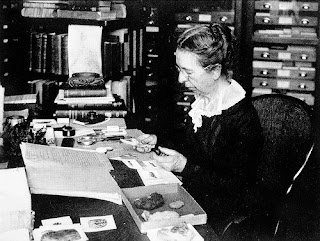
Institutions continue to celebrate Women's History Month by releasing wonderful resources. This photo of "Mary Jane Rathbun (1860-1943), working with crab specimens" is part of the Smithsonian's Flickr photostream and their "Women in Science" set.

Perhaps coincidental with these great images, the Library of Congress' Science Reference Services has published Women and Minorities in Science and Technology: a guide to Selected Resources. Like their other guides, this one contains screen after screen of references to books (general and specialized), journals, and recommended websites.

Thursday, March 12, 2009

Beyond Penguins and Polar Bears

Beyond Penguins and Polar Bears is a free online magazine aimed at K-5 teachers, with beautiful photographs and interesting articles. The link to the archives is at the top of the page, and many articles are linked to a "Virtual Bookshelf" bibliography.

If you'd like to go strait to a listing of many, many children's books, follow their "Book Club" link to their Shelfari site. Also worth reading is their blog, highlighting resources of interest in their magazine and elsewhere.

Tuesday, March 10, 2009

WAVES

This lovely image is from George Eastman House's Flickr photostream, and their new "Women!" set. WAVEs, or "Women Accepted for Volunteer Emergency Service," were women returning to general Navy service in 1942. Yes. Returning. Women first entered U.S. Naval service in 1917.

For more on the women in the U.S. Navy, the Naval Historical Center's World War II era WAVES overview and images, and World War I era Yeomen (F) overview and images are a great place to start.

Monday, March 09, 2009

When the English warship became a gun platform

The BBC has published a fantastic article on its website, 'Superguns' of Elizabeth I's navy, outlining what's been learned from a reproduction cannon. The cannon, modeled on one recovered from an Elizabethan-era shipwreck, is providing the evidence to back up the historical accounts of the Elizabethan navy as outstanding gunners, much feared.

The article is well worth reading if you've ever been curious about naval gunnery. Wonderfully written, it's explains the technical issues and why these discoveries are so exciting beyond historical interest in the English battle with the Spanish Armada--why the development of uniform cannon changed the role of the warship to one of an effective gun platform, and led to the naval warfare that is practiced even today.

And it also has a cool video of the replica gun's first firing.