(by Gina Bardi, Reference Librarian)
Sometimes when you come to the library, you know exactly what material will be the most useful for your research. Other times, the library seems to be laid out before you as a vast and uncharted landscape of great unknowns. Like a prospector, you must dig a little here and there with hopes of striking it rich. In this regular feature we will mine the collection for veins of information and see if we can make our research fortune.
Today we are digging for treasure in the Coast Seaman's Journal, a periodical started in 1875 by the Coast Seamen's Union. Our library has a run from 1875 to 1918 as the Coast Seaman's Journal and then from 1918 to 1929 in its second incarnation as the Seaman's Journal. We also have a few convention issues from the 1930's. I pulled volume 22 which covers September 23rd, 1908 to September 13th, 1909.
What does the Coast Seaman's Journal have to offer? Shall we grab the pick axe of our curiosity and begin to dig?
Someone who was working on maritime labor history would absolutely want to include this publication in their research (and if they didn't know it existed, a helpful reference librarian would point it out). Each issue is devoted to labor causes on both coasts and the Great Lakes. World events are discussed through the lens of labor. This journal provides startling clear insight into the mind of unions during the turbulent early years of their formation. There are also general news sections, sometimes maritime: "Mexico's first attempt to fortify her harbors with modern rifles will be undertaken at Santa Cruz" ("News from Abroad" 12). Sometimes not: "The Grand Parlor of the Native Sons of the Golden West, a California organization, has decided hereafter that no malt or spirituous liquors shall be used at the entertainments given by the order." ("Home News" 13). The good news is each volume is indexed at its start. The bad, or perhaps more amusing than bad, is the style in which they are indexed, which is by title of article and not by subject. One has to wonder what this refers to:
"Story, Strange, Hinted at"
And I defy you to read the entry:
"Sea-Coffins Doomed"
and not linger for a moment on its promisingly macabre content.
A boon for genealogists would be the "Information Wanted" section of each issue. Here, worried friends, family and lovers leave ads hoping to find what has become of their missing loved ones. A typical one from reads:
"John Widell, who has been on the Pacific Coast and in Alaska for about 18 years, is inquired for by his nephew, Bernt Valdemar Blomquist, Box 65, Seattle Wash. "
Or this heartbreaker with a $50 reward for information:
"Albert Dietrich, bluish eyes and prominent upper teeth, fair complexion, dark blonde hair, 13 years of age, 4 feet 8 inches tall, missing from his home, 1539 9th Avenue, Sunset, San Francisco, since November 27th, 1907, is inquired for by his parents."
Another feature is that of the "Letters List". Family and friends could send letters to sailors at sea care of the union offices and they would be held there until the sailor returned from their voyage. Each week a list of lucky sailors who have letters waiting for them would be printed. There are also regular inclusions of sea shanties, With the Wits (a joke section of dubious nature) and some wonderful advertisements.
I've only scratched the surface, so to speak, of what this journal offers. Please come by and peruse our collection of the Coast Seamen's Journal and see what you can dig up.
Citations:
"Home News." Coast Seamen's Journal 22.33 (1909): 13. Print.
"Index". Coast Seamen's Journal 22 (1909). Print.
"Information Wanted." Coast Seamen's Journal 22.26 (1909): 12. Print.
"News from Abroad." Coast Seamen's Journal 22.24 (1909): 12. Print.
Tuesday, March 29, 2011
Digging for gold at the library: Coast Seaman's Journal
Mirrored from Full Fathom Five:
Thursday, March 24, 2011
Nautical Nursery Rhymes
Mirrored from Full Fathom Five:
This small treasure resides in the "Peterson, Peter H. (Capt.) Papers," (SAFR 18665, HDC 571) and expresses principles of seamanship in verse, such as:
Meeting on Opposite Tacks
On opposite tacks, when approaching too near,
The ship on the starboard has nothing to fear;
The one on the port tack has either to stay,
Or put up her helm and get out of the way.
For more on Taylor's Nautical School, the issuer of the booklet, see the promotional pamphlet, Taylor's Nautical School, San Francisco, in the Library collection at r V430.A4 T39, and Taylor's modern navigation, also in the Library at VK401.T3 1904.
Contributors: Keri Koehler, Collections Manager; Palma J. You, Archives Technician; Heather Hernandez, Technical Services Librarian.

Monday, March 21, 2011
Ship model conservation course, England
International Academic Projects is pleased to announce a 3 day
course 'Ship Models: Care, Conservation and Display' which will be
held at the National Maritime Museum, Greenwich and the Historic
Dockyard, Chatham, 11-13 October 2011. This is a new addition to the
2011 course calendar of International Academic Projects.
The course, aimed at collections managers, curators and
conservators, will be conducted by the curatorial and conservation
specialists of the National Maritime Museum, Greenwich and will
cover: the history of the making of ship models; the materials from
which models are made and issues concerning their handling and
movement; display methods; storage and display conditions; making
the materials required for restoration; and the use of plans,
paintings and photographs in the conservation process.
Course details and the proposed timetable are available at
http://www.academicprojects.co.uk/course-details.php?courseID=765
Places are also still available on several other courses offered by
International Academic Projects - including:
Conservation of Glass Objects
(London) 12 - 16 September, 2011
Making Replicas of Museum Objects
(Denmark) 6 - 10 June, 2011
Making Electroform Replicas of Museum Objects
(Denmark) 20 - 24 June, 2011
Digital Photography of Museum Objects
(London) 21 - 22 June, 2011
The Identification of Paper
(London) 4-5 July, 2011
Chemistry for Conservators correspondence course
(September - December 2011)
Please check No comments:

course 'Ship Models: Care, Conservation and Display' which will be
held at the National Maritime Museum, Greenwich and the Historic
Dockyard, Chatham, 11-13 October 2011. This is a new addition to the
2011 course calendar of International Academic Projects.
The course, aimed at collections managers, curators and
conservators, will be conducted by the curatorial and conservation
specialists of the National Maritime Museum, Greenwich and will
cover: the history of the making of ship models; the materials from
which models are made and issues concerning their handling and
movement; display methods; storage and display conditions; making
the materials required for restoration; and the use of plans,
paintings and photographs in the conservation process.
Course details and the proposed timetable are available at
http://www.academicprojects.co.uk/course-details.php?courseID=765
Places are also still available on several other courses offered by
International Academic Projects - including:
Conservation of Glass Objects
(London) 12 - 16 September, 2011
Making Replicas of Museum Objects
(Denmark) 6 - 10 June, 2011
Making Electroform Replicas of Museum Objects
(Denmark) 20 - 24 June, 2011
Digital Photography of Museum Objects
(London) 21 - 22 June, 2011
The Identification of Paper
(London) 4-5 July, 2011
Chemistry for Conservators correspondence course
(September - December 2011)
Please check No comments:
Thursday, March 17, 2011
New in the SF Maritime NHP Library
Mirrored from Full Fathom Five, due to its lack of an rss feed:
New in the Library:
The Library's new accessions lists from the later half of February and the first half of March are now available.
We download these lists from OCLC, whose public interface is known as WorldCat.org. Although we catalog directly on OCLC, we do not have the type of subscription that would allow us to appear as a holding library on WorldCat.org, but you can see our holdings in the NPS Combined Library Catalog. (See our Catalogs & Finding Aids page for catalogs listing other Museum Collections.)
* Library New Accessions, Feb. 16-28, 2011 (.pdf file, 19Kb)
* Library New Accessions, Mar. 1-15, 2011 (.pdf file, 14 Kb)
Monday, March 14, 2011
Do you have traveling plans?
Mirrored below is Palma J. You's new post from over at Full Fathom Five, Do you have traveling plans?
We do! Prior to the digital revolution, marine engineering plans often needed to travel between builders, owners, consultants and architects. Document tubes were used to protect plans while in transport. I am currently processing a large (94 linear feet) collection donated by Pillsbury & Martignoni, Naval Architects and Marine Engineers of San Francisco who were in business during the first half of the 20th century. Most of the plans inventoried thus far relate to tugs, towboats, sport fishing boats, freighters, barges and passengers vessels. Very interesting, but I also find the storage tube an interesting pre-plastic artifact.
The two varieties of materials used in construction of traveling tubes for this marine engineering firm are aluminum and fiber board. The plans stored inside are circa 1943-1965. More on the plans stored inside the tubes next time!
--Contributor: Palma J. You, Archives Technician


Thursday, March 10, 2011
Full Fathom Five
There's a new blog from the Collections Department at San Francisco Maritime National Historical Park, Full Fathom Five, where I'm a contributing editor. The software that we use does not yet have an rss feed, so for the time being, I'll be mirroring posts over here. Do please check it out--we'd appreciate your input.
The debut post:
The debut post:
Welcome to Full Fathom Five
When Shakespeare has Ariel sing this song in Act 1, scene ii of The Tempest, he sings of transformation--of the ordinary becoming something beautiful at the end of its life:
Full fathom five thy father lies;
Of his bones are coral made;
Those are pearls that were his eyes;
Nothing of him that doth fade,
But doth suffer a sea-change
Into something rare and strange.
Sea-nymphs hourly ring his knell:
Ding-Dong.
Hark! now I hear them -- Ding-dong, bell.
Here in the Collections Department at San Francisco Maritime, what we collect, preserve and make available were often ordinary objects at the ends of their useful lives--sometimes, literally, from "full fathom five," in the case of objects retrieved from shipwrecks. Through our care, we give them new life as museum collections, and we help them to emerge into exhibits and into the arena of research, study, and enjoyment.
Join us in our journey, deep in the collections, through the rich and strange.
Wednesday, March 09, 2011
UK ship models conservation course & conservation assistant position
The latest issue of the Conservation Distlist had news of interest to the maritime conservation community; an interesting course:
And an interesting position announcement:
International Academic Projects is pleased to announce a 3 day
course 'Ship Models: Care, Conservation and Display' which will be
held at the National Maritime Museum, Greenwich and the Historic
Dockyard, Chatham, 11-13 October 2011. This is a new addition to the
2011 course calendar of International Academic Projects.
The course, aimed at collections managers, curators and
conservators, will be conducted by the curatorial and conservation
specialists of the National Maritime Museum, Greenwich and will
cover: the history of the making of ship models; the materials from
which models are made and issues concerning their handling and
movement; display methods; storage and display conditions; making
the materials required for restoration; and the use of plans,
paintings and photographs in the conservation process.
Course details and the proposed timetable are available at
http://www.academicprojects.co.uk/course-details.php?courseID=765
Places are also still available on several other courses offered by
International Academic Projects - including:
Conservation of Glass Objects
(London) 12 - 16 September, 2011
Making Replicas of Museum Objects
(Denmark) 6 - 10 June, 2011
Making Electroform Replicas of Museum Objects
(Denmark) 20 - 24 June, 2011
Digital Photography of Museum Objects
(London) 21 - 22 June, 2011
The Identification of Paper
(London) 4-5 July, 2011
Chemistry for Conservators correspondence course
(September - December 2011)
Please check http://www.academicprojects.co.uk for full
information or get in touch by email or telephone if you have any
questions.
Hannah Turk
Administrative Assistant
International Academic Projects
6 Fitzroy Square, London W1T 5HJ
+44 207 380 0800
Fax: +44 207 380 0500
And an interesting position announcement:
Preventive Conservation Assistant
National Maritime Museum
London
UKP18,000 - UKP22,000
With three historic sites housing a range of world-renowned
collections, the National Maritime Museum is a unique and
stimulating environment. With the opening of the brand new Sammy
Ofer Wing this summer, we are looking for an individual to join our
Preventive Conservation team to provide key support in the
preservation and care of our collections across all sites.
Your role will be to carry out cleaning and other housekeeping
duties in addition to assisting in the implementation of the Pest
Management Plan and Environmental Monitoring Strategy. We will also
need you to write method statements and reports, work with team
members on larger projects and suggest improvements to working
practices.
A good understanding of conservation, security and Health and Safety
relating to collections care is essential, along with the ability to
select appropriate cleaning options. A high level of manual
dexterity, experience of working with a range of hand tools and the
ability to work at heights are also important, plus strong
documentation and IT skills. A relevant qualification and experience
within a heritage environment would both be preferred.
For a full job description and details of how to apply, please visit
http://www.nmm.ac.uk/jobs
Closing date: 20 March 2011.
Birthe Christensen
Head of Conservation and Preservation
National Maritime Museum, Greenwich
London SE10 9NF
+44 20 8312 6504
Wednesday, March 02, 2011
Happy birthday Kurt Weill

Kurt Weill was born 111 years ago today in Dessau, Germany. He composed the music for Seeräuber Jenny, known in English as "Pirate Jenny," one of the very famous songs from Die Dreigroschenoper (The Three Penny Opera) with lyrics by Bertolt Brecht.
Thursday, February 24, 2011
BibMe, Zotero
When I heard that BibMe.org and Citavi.com had become WorldCat.org citation partners, I decided to check BibMe out. I went for BibMe simply because it's web-based, and that made it attractive for accessing from multiple computers--if I worked mostly from one machine, I would have downloaded Citavi to explore also.
I have to admit I'm rather new to online citation & reference management. I've been using Zotero.org for a few months, and love it for managing information gleaned from online sources, but was attracted to BibMe because it's a bibliography builder. I have to also admit that I haven't thoroughly explored Zotero's capabilities to generate bibliographies--after about five minutes of clicking around, I gave up, and the announcement about BibMe sent me there--so please let me know if there's great functionality in Zotero that I missed!
Within seconds, I was compiling a bibliography in BibMe. Registration isn't necessary--you can use it to generate citations immediately without registration. I did end up registering, though, because I wanted to save a bibliography and share it. I had a great bibliography generated in a few minutes: my Maritime Reading Lists (or lists that include maritime titles). If you want to add any of these to your own bibliography, click the "Add to Bibliography" icons--although you won't see anything happen, when you click the "Bibliography Maker" tab, the citations you added will be there, where you can manipulate them, download them, etc.
My only wish is that the URLs listed in the citations for websites be activated--having to copy & paste a link into a browser window to go there seems antiquated to me.
In the future, I will explore the capabilities of Zotero more thoroughly--I like it because of the short learning curve, or, really, no learning curve--I was up and running with it right away after installing it with my Firefox browser. But I won't be doing that right away--it runs very, very slowly for me. BibMe runs faster--everything loads quickly, and I have a citation in whatever standard format I choose right away, accessible from anywhere. With Zotero, I need to log in to see "My Library," (after doing a sync from the computer I've been using), and just logging in takes a long time.
So if you're new to managing your online sources, you may wish to check out these tools--or others--there are many, many out there! These are two tools that I've been trying out.
I have to admit I'm rather new to online citation & reference management. I've been using Zotero.org for a few months, and love it for managing information gleaned from online sources, but was attracted to BibMe because it's a bibliography builder. I have to also admit that I haven't thoroughly explored Zotero's capabilities to generate bibliographies--after about five minutes of clicking around, I gave up, and the announcement about BibMe sent me there--so please let me know if there's great functionality in Zotero that I missed!
Within seconds, I was compiling a bibliography in BibMe. Registration isn't necessary--you can use it to generate citations immediately without registration. I did end up registering, though, because I wanted to save a bibliography and share it. I had a great bibliography generated in a few minutes: my Maritime Reading Lists (or lists that include maritime titles). If you want to add any of these to your own bibliography, click the "Add to Bibliography" icons--although you won't see anything happen, when you click the "Bibliography Maker" tab, the citations you added will be there, where you can manipulate them, download them, etc.
My only wish is that the URLs listed in the citations for websites be activated--having to copy & paste a link into a browser window to go there seems antiquated to me.
In the future, I will explore the capabilities of Zotero more thoroughly--I like it because of the short learning curve, or, really, no learning curve--I was up and running with it right away after installing it with my Firefox browser. But I won't be doing that right away--it runs very, very slowly for me. BibMe runs faster--everything loads quickly, and I have a citation in whatever standard format I choose right away, accessible from anywhere. With Zotero, I need to log in to see "My Library," (after doing a sync from the computer I've been using), and just logging in takes a long time.
So if you're new to managing your online sources, you may wish to check out these tools--or others--there are many, many out there! These are two tools that I've been trying out.
Wednesday, February 16, 2011
Assistant Librarian, Reader Services, Castine, Maine
The Nutting Memorial Library at the Maine Maritime Academy in Castine, Maine, is seeking an Assistant Librarian, Reader Services. From the listing on LISJobs:
Assistant Librarian, Reader Services
Nutting Memorial Library
Maine Maritime Academy
Castine, Maine
The successful candidate will possess an MLS from an ALA-accredited Program; experience in an academic library; experience with integrated library systems (I.I.I. Millennium preferred); thorough knowledge of bibliographic database searching; and familiarity with web site design and maintenance. A background in teaching library skills is strongly preferred. Responsible for reference services, library instruction, interlibrary loan, and circulation services. Ten-month position with generous benefits, pay range 20 $35,511.97. Some nights and weekends may be required.
Interested candidates should submit a completed application and resume as soon as possible, including a list of at least three professional references to:
Director of Personnel Administration
Box 3
Castine, ME 04420
An original, Maine Maritime Academy application must be submitted to the MMA Human Resources Office, prior to consideration by a supervisor or selection committee. Successful candidates may be subject to a background investigation appropriate to the position offered. For an online application form, go to www.mma.edu under jobs@mma. MMA is an EOE ~~~ Women and minorities are particularly encouraged to apply.
Maine Maritime Academy (MMA) is an 850 student, public, fully accredited four-year college located in the small coastal village of Castine, Maine. The college is one of six state-supported Maritime Colleges in the United States. MMA is a college of engineering, transportation, management, ocean sciences and international business.
Library web site: library.mma.edu
When applying, please mention that you saw this ad on LISjobs.com.
Wednesday, February 09, 2011
The Adventurous Life of the Late William Scoresby
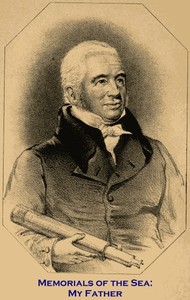
Memorials of the Sea : My Father: Being Records of the Adventurous Life of the Late William Scoresby, Esq. of Whitby by his son, the Rev. William Scoresby, D.D., is now available on Project Gutenberg.
Third in the author's Memorials of the Sea, the volume does seem to cover a remarkable career, as outlined by the table of contents:
Chapter I.—Early Life and Progress as a Seaman  3
Sect.  1. My Father’s early Life  3
   2. His First Year’s Apprenticeship  12
   3. His Progress as a Seaman, with Incidents of Sea-life  20
   4. Capture by the Enemy, and Escape from a Spanish Prison  26
   5. Rewards of Masterly Seamanship  31
   6. Entrance on, and Progress in Training in, the Greenland Whale-fishery  36
Chapter II.—Commencement and Progress in Whale-fishing Enterprise as Commander  42
Sect.  1. Disappointment in his First Command  42
   2. His Second Adventure and commencing Prosperity  52
   3. Further Successes, with their comparative Relations, in the Ship Henrietta  55
   4. Episodical Incident—the Rescue of endangered Pleasurers  65
   5. The Greenland Doctor  71
   6. Taming of a Bear—interesting Recognition  78
Chapter III.—The Ship Dundee, of London  86
Sect.  1. Entrance on, and general Results of, this new Command  86
   2. Dangerous Accident—admirable Tact  89
   3. The Dandy Sailor, or “Fine Tommy”  92
   4. Unfortunate Voyage, and Adventure in the Greenland Ices  96
   5. Successful Stratagem in War  103
   6. Extraordinary Exploit in “cutting in,” single-handed, a moderately-grown young Whale  108
Chapter IV.—The Ship Resolution, of Whitby  116
Sect.  1. Continued Prosperity; the Results, comparatively and generally, of this fresh Enterprise  116
   2. Treatment and Recovery of a half-frozen Seaman  126
   3. Judicious Treatment of Men having suffered from severe Exposure  129
   4. The Crow’s Nest  135
   5. Extraordinary Celerity in preparing an empty Boat for the Fishery  139
   6. Tact and Bravery in attacking and killing a dangerously-resisting Whale  144
   7. Remarkable Enterprise: the nearest Approach to the North Pole  152
   8. Devotional Habits, at Sea and on Shore  164
Chapter V.—Further Enterprises: General Results  171
Sect.  1. The Greenock Whale-fishing Company  171
   2. “Cum au greim a gheibhthu”  174
   3. Subsequent and concluding Enterprises  178
   4. General Results of his entire Whale-fishing Adventures  185
   5. Unusual Capture of Walruses  189
Chapter VI.—General Characteristics, and Miscellaneous Notices  195
Sect.  1. Superiority as an Arctic Navigator  195
   2. Natural Science  203
   3. Improvements and Inventions  215
   4. Miscellaneous and concluding Notices  224
The book also includes interesting statistics about whaling activities and the vessels' finances--it's wonderful to see this book become widely available from Project Gutenberg, like all their titles, in such a nice electronic edition, in so many formats.
Wednesday, February 02, 2011
Melville and Hawthorne
Robert McCrum's article, Herman Melville, the last great enigma of American literature : a new fictionalised account tries to unravel the dark secrets of the creator of Moby-Dick (published Jan. 30, 2011 at the Guardian's website) doesn't actually get around to mentioning Jay Parini's new novel, The Passages of Herman Melville, until the end. Until then, it's a witty, engaging introduction to this momentous encounter. His first mention of Melville is captivating:
In no more than a couple of screens, McCrum presents many of the reasons why so many have been so interested in Melville for so long.
If you have never read biographical material on Melville, maybe even never read Moby Dick, and wonder what all the hoopla is about, take just a few minutes to read what Robert McCrum has to say on the topic.
...Herman Melville who, after a very successful debut (Typee), was struggling to complete an unwieldy coming-of-age tale about a South Seas whaler.
In no more than a couple of screens, McCrum presents many of the reasons why so many have been so interested in Melville for so long.
If you have never read biographical material on Melville, maybe even never read Moby Dick, and wonder what all the hoopla is about, take just a few minutes to read what Robert McCrum has to say on the topic.
Wednesday, January 26, 2011
Jennifer Ewing's Spirit Boats
San Francisco artist Jennifer Ewing has been exploring spirit boats through painting and sculpture. The article on her website about her Spirit Boat Series makes for wonderful reading--I don't want to attempt to paraphrase, as her writing is as beautiful as her paintings and sculptures.
If you're interested in exploring boats as an artistic metaphor, or especially in creating boats for personal mental and/or spiritual journeys, explore her website. There are also other locations with photos of her creations:
If you're interested in exploring boats as an artistic metaphor, or especially in creating boats for personal mental and/or spiritual journeys, explore her website. There are also other locations with photos of her creations:
- Her page at artspan.org has nine images
- Search "jennifer ewing" "spirit boat" on Flickr to retrieve photos from Anna L. Conti's photostream of Ewing's paintings at the Royce Gallery and of her studio and installations.
Tuesday, January 18, 2011
So Ends This Day
The Friends of the San Francisco Maritime Museum Library send along this announcement:
TIA: The Friends support the Library where I work.
So Ends This Day—The Portuguese in American Whaling
Saturday, January 22, 2011, 6:00 p.m. In the Maritime Library. Donation: $5 (general public); $4 (Library Friends and SFMNPA members)
Historian and author Don Warrin will discuss his new book, So Ends This Day—The Portuguese in American Whaling 1765-1927. In it he tells the story of the Portuguese crewmen who ultimately came to dominate the American whaling industry in its final days on the Pacific coast. Copies of the book will be available for sale and signing.
TIA: The Friends support the Library where I work.
Wednesday, January 12, 2011
Online Historical Newspapers
Randy Seaver at the Genea-Musings blog posted an interesting list of historical newspaper sites as his Tuesday Tip for Jan. 4, 2011.
The second and third sites on his list have one entry per site--that is, on each of these sites, for example, the California Digital Newspaper Collection is one entry, even though it currently contains twenty-one titles.
The first entry, however, Miriam Robbins Midkiff's Online Historical Newspapers Website, is far more useful. Newspaper titles are listed geographically, currently covering Australia, Canada, and the USA. The site is not comprehensive, and encourages sending in suggestions for new entries. (The New York Times, for example, isn't listed, even though the title is available online back to 1851--for a fee.) Also, look through the listings carefully--the San Francisco Call is listed as San Francisco Call as well as Call, but using the find feature of a browser with a significant word (like "Call") ensures seeing all entries. Newspapers typically available via library subscriptions seem not always present, but over all, it's a very comprehensive list and very useful.
The second and third sites on his list have one entry per site--that is, on each of these sites, for example, the California Digital Newspaper Collection is one entry, even though it currently contains twenty-one titles.
The first entry, however, Miriam Robbins Midkiff's Online Historical Newspapers Website, is far more useful. Newspaper titles are listed geographically, currently covering Australia, Canada, and the USA. The site is not comprehensive, and encourages sending in suggestions for new entries. (The New York Times, for example, isn't listed, even though the title is available online back to 1851--for a fee.) Also, look through the listings carefully--the San Francisco Call is listed as San Francisco Call as well as Call, but using the find feature of a browser with a significant word (like "Call") ensures seeing all entries. Newspapers typically available via library subscriptions seem not always present, but over all, it's a very comprehensive list and very useful.
Wednesday, January 05, 2011
What's the most popular public room on the Minerva?
According to David Simpson's article in the Daily Mail, it's the library.
He writes about a library that sounds absolutely wonderful under the headline, "Cruise holiday on Swan Hellenic’s Minerva: Who needs water slides when you have a library?" And it's not just any library; it has been cared for by the same person for fourteen years, Victoria Kennedy, and assembled over fifty years to help passengers learn about the places they're visiting. A measure of its success is the passengers' repeat booking rate: 92 percent.
I found one site with a photo of the library, and it looks very comfortable. Plus, they have puzzles!
He writes about a library that sounds absolutely wonderful under the headline, "Cruise holiday on Swan Hellenic’s Minerva: Who needs water slides when you have a library?" And it's not just any library; it has been cared for by the same person for fourteen years, Victoria Kennedy, and assembled over fifty years to help passengers learn about the places they're visiting. A measure of its success is the passengers' repeat booking rate: 92 percent.
I found one site with a photo of the library, and it looks very comfortable. Plus, they have puzzles!
Wednesday, December 22, 2010
Records yield 200 years of fish population data
Dave Mosher's article Old, Ignored Records Yield 200 Years of Fish Population Data was published on Nov. 19, 2010 in Wired Science. Headlines such as "Old, Ignored Records" always make me smile--were they truly ignored? Hadn't they been cataloged and preserved in a library or archive? Of course, the article also uses the phrase "digging up," which also makes me smile--the researchers probably used carefully constructed catalogs and finding aids.
At any rate, the purpose to which they put these records was novel, using them as data sources for fish populations, and Dave Moser's article does provide a wonderful overview of their research, as well as a reminder that we can't always anticipate the future value of the materials preserved in libraries in archives.
Luckily, the product of the research, Coding Early Naturalists' Accounts into Long-Term Fish Community Changes in the Adriatic Sea (1800–2000) by Tomaso Fortibuoni, Simone Libralato, Saša Raicevich, Otello Giovanardi, and Cosimo Solidoro, is available for free online, including their interesting list of books that were analyzed as "Table S1," available as a Word document.
At any rate, the purpose to which they put these records was novel, using them as data sources for fish populations, and Dave Moser's article does provide a wonderful overview of their research, as well as a reminder that we can't always anticipate the future value of the materials preserved in libraries in archives.
Luckily, the product of the research, Coding Early Naturalists' Accounts into Long-Term Fish Community Changes in the Adriatic Sea (1800–2000) by Tomaso Fortibuoni, Simone Libralato, Saša Raicevich, Otello Giovanardi, and Cosimo Solidoro, is available for free online, including their interesting list of books that were analyzed as "Table S1," available as a Word document.
Wednesday, December 15, 2010
Is SF Bay fished out?
The December 2-7, 2010, edition of the East Bay Express features Alastair Bland's article, Is San Francisco Bay Fished Out? Even if you're not interested in California's fishery issues, the article is worth reading--the issues that Bland explores impact more than SF Bay's fishers, and more than the area that we think of as San Francisco Bay.
Reading the article made me realize that when I gaze out on the Bay's waters, I see only the surface. I don't see, and often don't think about, the ecosystem beneath the water's surface. I also don't keep in mind that the "boundary" between salt and fresh water is, if you'll forgive the pun, a fluid one. For example, the salmon fishery in California is one that can't be thought of in terms of "marine" or "fresh" waters--reading Bland's article reminded me that California's fishery issues can not be limited to discussions of catching the fish in the salty Bay's waters without considering the issues confronting the fishery upstream, in the fresh waters of the state's interior.
In addition, we can't limit our discussions to the fishers on the water--the issues facing the fisherman don't begin or end on the deck, but reach into the markets and restaurants where we consumers create the demand, and into the hearts of those of us devoted to that moment when we feel the tug of our dinner on the pole in our hands.
I recommend this article to anyone interested in any salt water fishery, past or present--Bland's featuring the fishers in SF Bay creates an awareness of the wider world in which the fish, the fishers, and the diners live. And when we keep in mind the fact that some fish are long-lived, long-distance champions, populating the oceans that circle the globe, it lends greater meaning to the resources, and traditions, that went into putting that filet on our plate.
Reading the article made me realize that when I gaze out on the Bay's waters, I see only the surface. I don't see, and often don't think about, the ecosystem beneath the water's surface. I also don't keep in mind that the "boundary" between salt and fresh water is, if you'll forgive the pun, a fluid one. For example, the salmon fishery in California is one that can't be thought of in terms of "marine" or "fresh" waters--reading Bland's article reminded me that California's fishery issues can not be limited to discussions of catching the fish in the salty Bay's waters without considering the issues confronting the fishery upstream, in the fresh waters of the state's interior.
In addition, we can't limit our discussions to the fishers on the water--the issues facing the fisherman don't begin or end on the deck, but reach into the markets and restaurants where we consumers create the demand, and into the hearts of those of us devoted to that moment when we feel the tug of our dinner on the pole in our hands.
I recommend this article to anyone interested in any salt water fishery, past or present--Bland's featuring the fishers in SF Bay creates an awareness of the wider world in which the fish, the fishers, and the diners live. And when we keep in mind the fact that some fish are long-lived, long-distance champions, populating the oceans that circle the globe, it lends greater meaning to the resources, and traditions, that went into putting that filet on our plate.
Wednesday, December 08, 2010
Crochet Coral Reef in D.C. and N.Y.
Once again, The Hyperbolic Crochet Coral Reef is on exhibit! If you're in Washington D.C. or New York City, you have a chance to visit the The Hyperbolic Crochet Coral Reef at the Smithsonian's National Museum of Natural History (D.C.), or the portion of it that's on display at the Smithsonian's Cooper-Hewitt, National Design Museum (New York). In addition, crocheters have created the Smithsonian Community Reef, which is on display with Hyperbolic Reef in D.C.
Whether or not you can go in person, the Smithsonian has provided wonderful resources to enjoy the exhibit remotely. This month the Smithsonian Magazine has a great article by Jess Righthand about the exhibit and the community's creations, and the exhibit website is full of links to resources such as the Flickr and Ravelry groups, as well as links for further information on reefs, hyperbolic space, and how to create your own coral reef creations that you can photograph and share online.
My thanks to my friend Kate for sending this information along!
Whether or not you can go in person, the Smithsonian has provided wonderful resources to enjoy the exhibit remotely. This month the Smithsonian Magazine has a great article by Jess Righthand about the exhibit and the community's creations, and the exhibit website is full of links to resources such as the Flickr and Ravelry groups, as well as links for further information on reefs, hyperbolic space, and how to create your own coral reef creations that you can photograph and share online.
My thanks to my friend Kate for sending this information along!
Wednesday, December 01, 2010
Dave Porter in the South Seas

Illustration by I.B. Hazelton, from the Project Gutenberg edition of Dave Porter in the South Seas, or, The Strange Cruise of the Stormy Petrel, by Edward Stratemeyer (1862-1930).
Subscribe to:
Posts (Atom)
