Fan of Full Fathom Five? Be sure to check it out at its new home!

Tuesday, August 04, 2009

The Prismatarium

Juli Carter took the time to comment on a previous post about the Aquatic Park Bathhouse, alerting me to her lovely photos of the ceiling of the room that Hilaire Hiler called the Prismatarium. Juli generously granted permission to reproduce her photos here, and writes:

"Alerted by recent pictures in the Guess Where SF Flickr pool and subsequent discussion, a friend and I made a special trip to see the newly cleaned and restored Maritime Museum (formerly Aquatic Bathhouse). Everything about it is spectacular: the architecture, the murals, the view towards Alcatraz...

The Prismatarium was empty of exhibits, full of echoes and shade. These pictures show the light fixture at the center of the circular room, with the color wheel that extends out to the windows, in natural light (with the windows blocked to preserve the art) and with the exposure digitally manipulated."

Juli's photo of the ceiling in natural light:


And Juli's digitally manipulated photo:


It is a fascinating room, and these photos show only the center point of the large, colorful ceiling. In Aquatic Park Building Decoration, Hilaire Hiler the room, originally "The Ladies Lounge," and this ceiling fixture are described:

At the opposite end of the Portico is another circular room which is used as a Ladies' Lounge. The form of this room made it appropriate for the decoration which consists of a color circle covering the entire ceiling. A moving lighting fixture containing lights in the color of the Physical Primaries makes it possible to give striking demonstrations on the relationship of color and light. Charts showing the Psychological the Pigment Primaries [sic], and the Solar Spectrum, etc. adorn the walls and make the room a veritable full size schema of the world of color in outline form, which its designer, Hilaire Hiler, calls a "Prismatarium" functioning in relation to the world of color much as a Planetarium does for the heavens. These considerations in no way interfere with the function of the room as mentioned above, as the fondness of the Fair Sex for colors is too well known to merit discussion.

To see a couple of the "charts" mentioned above, go to the NPS Museum Collections catalog, and search: hilaire AND hiler AND painting

My thanks to Juli for her wonderful contributions to MaritimeCompass.

Photos © All rights reserved, Juli Carter, http://www.flickr.com/photos/auntijuli/
Used with permission

Thursday, July 30, 2009

Pacific Ocean evening, La Jolla Strand Park


It was a lovely vacation.


Photo: © All rights reserved, Paul Hernandez,
http://www.flickr.com/photos/paul_a_hernandez/, used with permission.

Wednesday, July 01, 2009

Brief hiatus

Just a short note that I'll be taking a couple of weeks off for vacation--rather than putting the blog on autopilot with no guarantee that I could keep abreast of comment moderation, I thought I'd interrupt our normal maritime topics with a personal note to let y'all know what's up. (I'm really excited--this is my first real vacation in years! I'll be enjoying some serious offline time.)

Tuesday, June 30, 2009

Black Canada & the journey to freedom

Several things about Geoff Davies' article Exhibit illustrates slave trade's place in Maritime history are noteworthy, especially the quote from John Hennigar-Shuh, manager of development and partnerships at the Maritime Museum of the Atlantic:

"There was for years a sense that the Maritime heritage of this province was owned by old white guys with beards," Hennigar-Shuh said.

“This exhibit helps us to underline for everyone who comes here that our history is diverse and marvellously complex, and is something that belongs to all of us.”

The exhibit features a beautiful freedom quilt, which is pictured in the article, made by the North Preston Senior Citizens Club.

Exhibit panels are available in the online version of the exhibit in .pdf; the exhibit is also available in French, En Route vers le Nord: Le voyage vers la liberté des Noirs du Canada.

Thursday, June 25, 2009

From National Geographic

I enjoyed reading Simon Worrall's article, Made in China, in the latest issue of National Geographic magazine. The concept of 'the maritime silk road' was new to me--and fascinating! The story of the shipwreck and its recovery is also engaging, as are Tony Law's photographs, which include that of the oldest intact cobalt-blue-and-white ceramic from China ever discovered.

If you're reading the article on their website, be sure to click over to the Photo Gallery: U.S. Marine Protected Areas. Like everything on their site, navigation is easy, even it takes a while for the page to load--it's worth the wait.

Thursday, June 18, 2009

Replica trading raft

I read the Science Daily article about Professor Dorothy Hosler and her students' building of a raft to replicate those used in pre-Columbian Pacific trade with interest. (My interest was sparked by reading Charles Mann's excellent book, 1491: new revelations of the Americas before Columbus) I wanted to learn more--frankly, I wanted to see photos.

In the May 13, 2009 issue of MIT's Tech Talk are photos of the raft's test on the Charles River. (It's on the last page.)

The raft still has some more tests to undergo, but the article reports that so far it performed very well!

Tuesday, June 16, 2009

Top 10 expatriate tales

The Guardian has a new top ten list, Malcolm Pryce's top 10 expatriate tales. The article opens with a mention of Pryce finishing his first novel on a cargo ship, coloring the whole list with the air of a sea voyage.

The list is wide-ranging, but of particular interest is no. 4, The Discovery of Tahiti; a journal of the second voyage of HMS Dolphin round the world under the command of Captain Wallis, RN, in the years 1766, 1767, and 1768, written by her master George Robertson.

Thursday, June 11, 2009

Philosophical Transacations, vol. 1

Volume 1 of the Philosophical Transactions of the Royal Society is now available on Project Gutenberg and makes for fascinating reading. "For Anno 1665, and 1666," it contains such maritime treasures as "An Appendix to the Directions for Seamen, bound for far Voyages," (from which the image at left was taken), "Of the New American Whale-fishing about the Bermudas," and "Certain Problems touching some Points of Navigation."

There are also discussions related to the making of telescopes and barometers, as well as articles related to the discovery of a "permanent Spott" on Jupiter, such as this one from the issue for "Munday, March 6. 1664/5:"

A Spot in one of the Belts of Jupiter.

The Ingenious Mr. Hook did, some moneths since, intimate to a friend of his, that he had, with an excellent twelve foot Telescope, observed, some days before, he than spoke of it, (videl. on the ninth of May, 1664, about 9 of the clock at night) a small Spot in the biggest of the 3 obscurer Belts of Jupiter, and that, observing it from time to time, he found, that within 2 hours after, the said Spot had moved from East to West, about half the length of the Diameter of Jupiter.

The Ingenious Mr. Hook indeed.

Tuesday, June 09, 2009

Conference and journal announcement

Massachusetts Maritime Academy will host a Maritime Conference in the Humanities Oct. 23-25, 2009.

The conference details are already up on their website as is the call for papers (deadline is July 1, 2009). Their CFP also mentions a new journal:

The Maritime Conference Program Committee invites individual paper proposals and full panels (three proposals and a chair) on any aspect of the individual's or civilization's relationship with the sea through literature, history, or culture. Papers or panels may address such areas as literary writers and the sea from any period in American or global history; exploration; whaling; merchant or naval history; personal narratives of life at sea; survival literature; war at sea; the visual artist and the sea; poetry and the sea; or any other subject addressing our engagement with the sea through the humanities.

Selected conference papers will be published in the premier issue of the Academy's new annual peer-reviewed journal, The Nautilus: A Maritime Journal of Literature, History, and Culture, forthcoming in 2010.

I look forward to seeing the journal!

Thursday, June 04, 2009

Sea chanties on June 5

The second episode of Voicebox will air on KALW on Friday night, June 5, 2009, from 10:00-11:00pm PST, and according to host Cloe Veltman's blog for the show:

This week, Chloe dives into the salty depths of maritime music to explore the voices of some of the world’s greatest sea chantey artists. Special guest Walter Askew, front man of the sea music band Salty Walt and the Rattlin’ Ratlines, sings live in the studio and explains that there’s more to sea music than “what shall we do with the drunken sailor.”

As far as I know, the show isn't podcast, so if you're interested, tune in--KALW's live stream is available in multiple formats.

TIA: I'm not just a fan of KALW, I'm a member. If you like what you hear, consider a donation (no matter how small--they really stretch their pennies) or look under the "Local" column on their homepage for other ways to support & connect to the station.

Tuesday, June 02, 2009

Hodges painting acquired by Whitby

A watercolor by William Hodges, who sailed with Captain Cook, entitled "Matavai Bay," has been acquired by the Captain Cook Memorial Museum in Whitby (UK). The Artdaily.org article about the painting has a lovely, large graphic of the painting, and the Culture24 article has some further details.

Thursday, May 28, 2009

Seas the Moment

The May 11, 2009 episode of "Are We Alone?," the science radio show from SETI, is all about how our oceans are changing. The show is rather folksy and chatty, as usual, but this episode, "Seas the Moment," is as educational as every episode that they air.

I enjoyed listening to Sylvia Earle, who is, according to the this episode's site, "Oceanographer, National Geographic Explorer-in-Residence, founder of DeepSearch Foundation, and author of Ocean: An Illustrated Atlas (National Geographic Atlas)," and who, I believe, could make even the most complicated oceanographic concept understandable to even the smallest child. The show is well worth a listen.

Tuesday, May 26, 2009

Lost Franklin clock found

On Canada.com is a Canwest News Service article by Randy Boswell, "Lost timepiece from Franklin Expedition found." The chronometer has "inexplicably surfaced" in Britain, and its story is fascinating. Boswell also reports that staff at the National Maritime Museum in Greenwich are hurrying to unravel that mystery as quickly as possible, as the timepiece will be on display within days of this article's publication.

It might be worth watching the NMM's website for updates!

Thursday, May 21, 2009

Aquatic Park Bathhouse murals

This view of the lobby of the Aquatic Park Bathhouse (also known as the Maritime Museum building) in San Francisco was taken by my talented coworker, Tim Campbell (and is posted here with his kind permission). The work on the conservation of Hilaire Hiler's murals progresses, and is a delight to behold--the colors on the cleaned portions of the murals are breathtaking.

More information on the larger Aquatic Park rehabilitation project is available at the San Francisco Maritime NHP's website, and more information on the building is at the Library of Congress' Built in America site, which presents the Historic American Buildings Survey/Historic American Engineering Record/Historic American Landscapes Survey, (1933-Present)--just search for: Aquatic Park Bathhouse

Tuesday, May 19, 2009

Lorri Glover on the Sea Venture

The Virginia Historical Society has put up Lorri Glover's recent Banner Series lecture, "The Shipwreck That Saved Jamestown: The Sea Venture Castaways and the Fate of America." (.mp3, ca. 40 min.) With Daniel Blake Smith, Lorri Glover is the author of The Shipwreck that Saved Jamestown about the wreck of the Sea Venture in Bermuda in 1609, and its wide implications. Ms. Glover's lecture is entertaining and educational and just one of many history lectures available online from the Society.

The Jamestown-Yorktown Foundation has even more information on Jamestown and Bermuda, including the Sea Venture, on their Jamestown and Bermuda: Virginia Company Colonies site (mounted in conjunction with their exhibit which runs from March 1-October 15, 2009)--you can scroll down or use the left-bar navigation for links to relevant audio, video, and textual materials.

Thursday, May 14, 2009

A look at nautical pulp fiction


It's a sunny day. You're reclining on a deck chair--possibly on the beach, possibly on the deck of a cruise ship making for an island port where the palm fronds sway in the cool breezes. Nap taken, you reach for one of the books nearby. Which would you rather read? Moby Dick, or "A lusty tale of the South Pacific ... The Strumpet Sea?" How about, "Adventurer, lover, rogue, spy--he was a Buccaneer Surgeon!" Do you want to find out "What makes Onionhead run? Food or sex?" Too romantic? Perhaps you'd rather try, "The adventures of George Abercrombie Fox--the toughest bastard in the Royal Navy!"

It's taken a long time, but best-sellers are making their way into research libraries, including ours. Public librarians have long known that these are the books in demand with the reading public, but it's taken longer for research libraries to realize that best-sellers, even pulp novels, have something to offer researchers.

How long? About a hundred and fifty years. Pulp fiction periodicals have been published since the mid-19th century, and the Library of Congress' Rare Book and Special Collections Division holds dime novels dating back to the 1860s. But scholarly attention has developed slowly...


This is the beginning of another article that I wrote for our Library Friends' Relative Bearings on the recently acquired Eberhardt Collection. You can read the rest of it in the .pdf version of the newsletter (p. 1 and 4).

Wednesday, May 13, 2009

Mary Lee Fowler in D.C.

If you're in the Washington, D.C. (USA) area on Thursday, May 14, consider spending your lunch break at the Navy Memorial where Mary Lee Fowler will be discussing and signing her book, Full Fathom Five: a Daughter's Search. The event is free and open to the public, part of the Memorial’s "Authors on Deck" Series of Navy-related Book Lectures.

Ms. Fowler's book won Honorable Mention in Non-Fiction at the 2009 Maine Literature Awards--more information on her book and the event is available at the Navy Memorial's events site.

(My thanks to André Sobocinski for sending the lecture announcement.)

Tuesday, May 12, 2009

Indigenous boats blog

My thanks to Bob Holtzman for writing to tell me about his wonderful blog, Indigenous Boats: Small Craft Outside the Western Tradition. His posts are a pleasure to read and include beautiful graphics, and the alphabetic list of labels makes navigating the site, and the traditions represented, very easy.

He also links to lots of books, and I hope he writes more book reviews--they're well considered and entertaining. Start by reading Raft Wackos.

Thursday, May 07, 2009

Infopeople

Infopeople is a familiar organization to many California library workers, but perhaps lesser known outside the state. They hold fantastic training sessions at low or no cost for California library workers, and make dozens of archived webcasts and webinars available to the world--for free. There are many of interest to those outside of library settings covering topics such as volunteering, technology, leadership and research skills. Many other resources are available on their site, including past training materials, podcasts, etc.

They've also compiled a great search tools page, that lists favorite resources by topic and leads to a custom best search tools site which lists multiple search engines on one page.

Tuesday, May 05, 2009

LJ's Darwin reading list

This year is the 150th anniversary of the publication of Darwin's On the Origin of Species. Want to read it, but unsure which edition might be the best? A recommendation is included in Library Journal's article, "Charles Darwin at 200 : celebrate evolution's father with these seven titles."

The article is an annotated bibliography which includes ISBN numbers (for quick searching on your favorite book site) and price. Want to find the titles? To find the books in a library, check out worldcat.org or to purchase the book new, check out IndieBound to purchase from an independent bookseller (just copy & paste that ISBN number, or any other search terms, in the search box). Buying used books? My favorite sites are Abebooks for a bargain, and TomFolio for nicer or collectible editions.

And which edition does LJ recommend? Darwin, Charles. On the Origin of Species: The Illustrated Edition. Sterling. 2008. c.538p. ed. by David Quammen. illus. index. ISBN 978-1-4027-5639-9. $35.

Monday, May 04, 2009

North Atlantic Fisheries History Conference, Norfolk, Va.

Dr. Ingo Heidbrink has sent along an announcement for the 12th North Atlantic Fisheries History Conference, taking place 19-22 August 2009 in Norfolk, Virginia (USA). More information is available from the North Atlantic Fisheries History Association. The invitation:

North Atlantic Fisheries History Association (NAFHA)
Old Dominion University, Department of History
Invitation:
12th North Atlantic Fisheries History Conference
19-22 August 2009 in Norfolk, VA (USA)
The North Atlantic Fisheries History Association (NAFHA) and the Department of History at Old
Dominion University (ODU) in Norfolk, VA invites you to participate in the 12th North Atlantic
Fisheries History Conference to be held from 19-22 August 2009 in Norfolk, VA (USA). This
meeting is designed to stimulate scholarly exchange between researchers at all levels (from
graduate students to senior scientists) and in all disciplines that relate to the long-term
development of fishing activity and its impact on the marine environment.
The special theme of the conference will be:
Fisheries Management in a Historical Perspective
In addition to seven thematic sessions with scholarly papers there will be a roundtable on archival
sources and fisheries history research and the launching of NAFHA’s big book (A History of the
North Atlantic Fisheries: Volume 1 – From Early Times to the mid-19th Century).
To register for the conference, please return the attached registration form via fax or e-mail.
Registration deadline is: June 15th 2009.
The conference fee (including all sessions, coffee-breaks, conference-dinner, etc.) is 180.—US$
for NAFHA-members, 210.—US$ for non-members for registration and payment before June 1st
2009 and (210.—US$ NAFHA members, 240.—US$ non-members for registration and payment
after June 1st 2009)
For a limited number of participants, especially young colleagues and colleagues from developing
countries, the conference fee might be partly or completely waived. Such a waiver requires
application before June 1st 2009.
The North Atlantic Fisheries History Association (NAFHA)
is an international, interdisciplinary organization that aims to enhance our knowledge and
understanding of the historical development of the fisheries conducted in the North Atlantic.
NAFHA meets its aim by fostering research activity, chiefly through the promotion of conferences
that bring together established and emerging scholars to examine socio-cultural, economic,
political and environmental aspects of commercial fishing activity over the last millennium. The
findings of these conferences, together with monographs and reference works, are disseminated
in the Association’s publication series, Studia Atlantica. For further information, visit
www.hull.ac.uk/nafha
The History Department at Old Dominion University in Norfolk, VA
is one of very few North American university departments with a focus on maritime history.
Research is conducted into global maritime history and the fisheries history of the Atlantic region.
Faculty members include renowned specialists in this field, who participate in the intercollegiate,
interdisciplinary Maritime Consortium at ODU. This brings together scholars from various
disciplines, including the humanities, sciences, social sciences and professional schools, all of
whom are concerned with maritime and marine affairs.
Norfolk, VA is a major seaport of the USA located at the mouth of the Chesapeake Bay. A rich
local history of fisheries in the Chesapeake Bay and the Atlantic Ocean as well as maritime
industries, marine research institutions, government agencies like NOAA, the USCG and
maritime museums and collections like the Mariners’ Museum in Newport News, VA characterize
the region.
Please forward this conference announcement / invitation to all colleagues who might be
interested in the 12th NAFHA conference in Norfolk, VA on 19-22 August 2009.
Please do not hesitate to contact us for further information at: iheidbri@odu.edu
Looking forward to seeing you in Norfolk, VA, in August 2009!
Dr. Ingo Heidbrink
-NAFHA Presidency & Conference Organizer-
Associate Professor – Department of History
Old Dominion University - Norfolk, VA
e-mail: iheidbri@odu.edu
Phone: 1-757-683-3656 or skype: ingo.heidbrink
North Atlantic Fisheries History Association (NAFHA)
Old Dominion University, Department of History
12th North Atlantic Fisheries History Conference
19-22 August 2009 in Norfolk, VA (USA)
Preliminary Program
Tuesday, August 18th :
Registration and get-together Reception
Wednesday, August 19th
9:30 – 11:00 Welcome and Introduction
11:30 – 13:00 Session I - The “Science” of Fisheries Management
Chair: David J. Starkey
Petter Holm:
Legitimacy and privatization:
Fisheries management and the role of the fishermen in society
Sydney Holt:
The Evolution of the Objectives, Science and Procedures of Fisheries Management
Katharina Jantzen:
The evolution of incentive-based quota management in North Atlantic cod fisheries
14:30 – 16:00 Session II - Fisheries: Resources, Politics, and Conflict
Chair: Maura Hametz
Will Bryan:
“The Strength of the Scup Ticket”:
The Politics of Fishery Regulation in Rhode Island, 1870-1872
Christopher Magra:
Oceanic Resource Extraction and Conflict in the Revolutionary Era
Christine Overgaard:
Managing Dutch cod fishery in the 1800s
16:30 – 18:00 Session III - Fisheries “Lifecycles”: Stocks and Management
Chair: Matthew McKenzie
Piers Crocker:
The Protection of Stocks of Norwegian Brisling 1900-2008
Ernesto Lopez:
The Anchovy in the Bay of Biscay. The Birth and the Death of a Fishery (1880-2008)
Soeren Byskov:
Trawling for the Danish Fishmeal c.1970-2008
Fisheries management in a sector with bad reputation
Thursday, August 20th
9:30 – 11:00 Session IV - Norwegian Fisheries’ Management
Chair: Aarstein Svihus
Paal Christensen:
The role of fisheries management in the history of the Norwegian fisheries, 1970-2005
Bjoern-Petter Finstad:
The Lofoten Law of 1897 and the Finnmark Law of 2009 –
A comparison between two Norwegian management regimes
Jan Petter Johnsen:
Management and cybernatization in Norwegian fisheries
11:30 – 13:00 Session V - Fishieries Policy in European Commerce
Chair: Lars U. Scholl
Gaute Heyerdahl:
The Creation of the European Communities Common Fisheries Policy, 1963-1970.
Chris Reid, Morten Karnoe Sondergaard:
Bilateral trade and fisheries development: the 1933 Anglo-Danish Trade Agreement
Olga Wisniewska:
Liver-oil logistics – norwegian fish-oil trade with Stettin in the end of XIXth century.
14:15 – 16:15 Session VI - Cultural Aspects of Fisheries History
Chair: Annette Finley-Croswhite
Dag Hundstad:
“Marcus the Fisherman” – Coastal Tourism and Regional Identity
Ole Sparenberg:
The Fischbratküche: „Fish ‘n’ Chips“ in Germany, 1924-1939
Robert Gear:
The Changing Role of Management in Shetland’s Pelagic Fishing Industry 1945-2005
Collin Davis:
Transatlantic Women: Fishermen’s Wives’ Organizations in Gloucester and Hull
16:15 – 18:00 Program with the United States Coast Guard
18:00 – 20:00 Reception
Friday, August 21st
9:30 – 11:00 Session VII - Seas of Change: Fisheries and Modernization
Chair: Ingo Heidbrink
Matthew McKenzie:
“Curbing Commodification: Biology, Culture, and Management in the
Southern NewEngland Colonial Inshore Fisheries.”
Aarstein Svihus:
Modernisation, rationalization of the fishing fleet and the
fishermen’s political response,1950-1990s
Brian McSorely:
Seas of Change: Redefining New England’s Fishing Community
11:30 – 13:00 Roundtable Archival Sources and Fisheries History Research
(Organized by Bill Thiesen, USCG)
14:30 – 18:00 NAFHA Internal Meetings
18:00 Conference Dinner
Saturday, August 22nd
9:30 – 16:00 Post-Conference Tour: Mariners’ Museum and USS MONITOR - Center
18:00 – 22:00 Farewell Reception

Friday, May 01, 2009

Princess Taiping update

Sakkis, a friend of one of Princess Taiping's crew members, Hugh Morrow, took time to leave a comment here. He has a nice post with a video on his blog, "Mr. Cakes mishapps and misadventures." He prompted me to look for some updates.

I was able to dig up the following news stories that cover different aspects of the incident:

In addition, The Old Salt Blog has an update with a link to the details on the freighter, the Champion Express.

Thursday, April 30, 2009

Discovering Hiler

This is an article that I wrote for the April 2009 issue of our Friends of the Library newsletter, Relative Bearings, on our library's holdings related to Hilaire Hiler, the artist who not only painted the murals in the Aquatic Park Building at SF Maritime NHP, but was in charge of all the artwork in the remarkable WPA building. I reprint it here because his contribution to maritime art seems little known.


Discovering Hiler
by Heather Hernandez, Technical Services Librarian
Reprinted from: Relative Bearings, issue 13 (Apr. 2009), p. 1-2.

Until recently, the library's holdings on Hilaire Hiler were sparse: his Notes on the Technique of Painting (1969), a few mentions in one volume of his friend Henry Miller's The Air-Conditioned Nightmare, and a pam file. When interest in Hiler was spurred by the second phase of the Museum restoration, we discovered this wasn't sufficient. For an artist so concerned with conveying his ideas in words as well as pictures, this wasn't sufficient.

This current phase of Museum restoration includes conservation of Hilaire Hiler's colorful murals evoking the lost Pacific continent of Mu. (Hiler is also responsible for the beautiful room, originally the Ladies' Lounge, that he called "The Prismatarium," as it functioned in relation to color the way a planetarium functions for the heavens.) In conjunction with completion of the first phase of restoration, the main floor of the Museum building has also been opened for public tours (which are wonderful and highly recommended--call the Visitor Center for more information, 415-447-5000). After taking the tour myself, I wanted to learn more, and discovered some monographs in the pam file--I individually cataloged them in order to increase their visibility. These were two very small volumes with sparse information--but one of them had a bibliography.

Debbie Grace, as the Technical Services Library Technician, has a talent for locating out-of-print books in excellent condition at reasonable prices. Working through the bibliography, as well as following online leads, we discovered that Hiler was a prolific author, writing often about painting and color theory, and that the Library lacked many important works. (See below for a complete list of our holdings.)

We also discovered that Hiler was quite an interesting figure. Born Hiler Harzberg in St. Paul, Minnesota on July 16, 1898, he and his entire family later formally changed their surname to Hiler due to the increasing amount of hostility and prejudice against Jews. In his youth Hiler attended the Rhode Island School of Design but later enrolled in the Wharton School of Finance and Commerce in accordance with his father's wishes. Many articles in Time magazine talk about the Hilers, including Hilaire's flunking out of Wharton, being told by two Philadelphia art schools that he can't draw, and pursuing piano and the saxophone before eventually making his way to Paris (despite being forcibly removed from a Europe-bound freighter by his dad's private detectives).

In Paris he played jazz, often with a live monkey on his back, and was part of the first jazz band ever to play in Germany. He came to co-own a jazz club that was closed down after the inadvertent ejection of a Senegalese Prince; he reopened the club, inviting every black in Paris to the opening.

In regards to art, he was steeped in post-cubist movements, and came to be recognized as a leader of the Precisionist movement, writing on abstract art, costume, and color and design theory. He moved to San Francisco in the 1930s, was commissioned by the WPA to paint our murals and was an active artist in California before starting the Hiler College in Santa Fe in 1944. Well traveled, he died in Paris in 1966. Several posthumous retrospectives have been held, and perhaps his stature as an artist is best expressed by an anonymous writer in Time:

"All his life he wanted to be a painter, but virtually his only formal education in the arts was a few lessons on the saxophone. Serious critics have praised his work, night-club proprietors have admired his murals, and Mrs. John D. Rockefeller Jr. and Mrs. John Work Garrett have bought his paintings." --"Hilermono," Time, Monday, Mar. 23, 1936.

Sources and selected bibliography (Library holdings noted):

Churchward, James. The Lost Continent of Mu: Motherland of Man. (not held by the Library)

Guthrie, Julian, "Maritime Museum restoration reveals hidden art," San Francisco Chronicle, Friday, October 3, 2008, p. B-1, http://www.sfgate.com/cgi-bin/article.cgi?f=/c/a/2008/10/03/BAQ6135E0E.DTL

Hiler color harmony chart and color mixing guide. In the Library at: r ND1510.H55 1900z

[Hiler, Hilaire file] In the Library at: p NA3860.H5 pam

Hiler, Hilaire. Aquatic Park building decoration. In the Library in: p NA3860.H5 pam

Hiler, Hilaire. Color harmony and pigments. In the Library at: rr ND1510.H545 1942, with accompanying chart.

Hiler, Hilaire. Notes on the technique of painting. In the Library at: ND1500.H5 1969

Hiler, Hilaire. The painter's pocket-book of methods and materials. In the Library at: ND1500.H53 1962

Hiler, Hilaire. Why abstract? In the Library at: p N6494.A2 H55 1962

Hiler, Hilaire. Why expressionism? (Includes: Manifesto of psychromatic design) In the Library at: r ND196.E9 H55 1946

Regan, Michael. Hilaire Hiler, 1898-1966. In the Library at: ND237.H59 R44 1976

Time magazine articles are available for free online from the 1920s on at http://www.time.com/ and include: "Hiler hits out" (Monday, Apr. 5, 1943), "Hilermono" (Mar. 23, 1936), "Sea murals" (Monday, Feb. 6, 1939), and "Why abstract?" (Monday, Oct. 1, 1945)

Waldemar, George. Hilaire Hiler et la vision panoramique. In the Library at: p ND237.H59 W35 1932

Major archival collections of Hiler's include those held by the Archives of American Art at the Smithsonian Institution and by the Zimmerman Library, Center for Southwest Research, University of New Mexico.

For more information, consult the library catalog, http://library.nps.gov/ or http://www.worldcat.org/

Monday, April 27, 2009

Princess Taiping crew rescued but junk lost

I read the BBC news article & watched the video with a heavy heart. The crew was so kind myself and my husband when we visited them and their beautiful junk at the Hyde Street Pier here in San Francisco. They even made us tea. They took the time to give such an interesting and fun presentation to us at our staff meeting.

I am so sorry for the loss of their craft. My heart goes out to Nelson, Angela and the crew, and everyone who gave so much of themselves to the Princess Taiping.

More stories in the Taipei Times and at the Hawaii Health Guide site.

Thursday, April 23, 2009

The Linda Hall Library

The Linda Hall Library website has some wonderful resources. Located in Kansas City, Missouri, the library is, according to its site:

...the largest privately funded library of science, engineering and technology in the world open to the public. The Library is dedicated to providing the most comprehensive physical, life science, engineering and technology collections, reliable library services, a host of other programs including a fellowship program, educational programs, and an ongoing series of public lectures, events and exhibitions.

Of particular interest are the online exhibitions which include, "Ice: A Victorian Romance," "Out of this World: The Golden Age of the Celestial Atlas," and "Voyages: Scientific Circumnavigations 1679-1859."

Tuesday, April 21, 2009

Europeana

Europeana is not just an excellent resource for images, but for texts, videos, even sounds. There are resources from previous centuries all the way up through 2004 (that I found)--chronological browsing is available through the "Timeline" link at the top of the page, or "Timeline navigator" at the bottom. To see the participating institutions, select "Partners," to see them listed by material type and location. The advanced search option is worth checking out--it doesn't take the time to direct you to another page, but quickly changes the search box to the advanced search options.

Even better, the interface is available in multiple languages--not just a few of the most spoken European languages, but I counted 26 different languages.

Is there maritime content? Oh, yes. Lots.

Thursday, April 16, 2009

U.S. WWII records

Some new resources are available at the National Archives' World War II Records website, including:

Finding Information on Personal Participation in World War II, a brochure on some of NARA's relevant records, and how to get started.

Missing Air Crew Reports (MACRs)

World War II Honor List of Dead and Missing Army and Army Air Forces Personnel

State Summary of War Casualties from World War II for Navy, Marine Corps, and Coast Guard Personnel

And don't miss the link at the bottom of the page, to the Archives Library Information Center's WW2 page for even more research resources.

Tuesday, April 14, 2009

Google Life images


Have you explored the Life photo archive on Google images yet? There are many, many maritime images. A fast way to start searching is to go directly to Google Image Search, images.google.com and in addition to your search terms, enter: source:life

If you'd like to browse by decade or topic, head to the collection's site, where a few topics are listed, and photo collections by decade from the 1860s to the 1970s are available.

Thursday, April 09, 2009

vads

vads, "the online resource for visual arts," has many images of interest to the maritime community. There is a link to the separate collections for easy browsing, but the search tool is excellent. Searching for "ship" returned images of ships as expected, but also of tableware used on ships, nautical fashions, and a toy cargo ship. The descriptions are thorough, and many types of images are included--photographs, paintings, posters and prints.

Tuesday, April 07, 2009

Whalers' Curious Art of Scrimshaw

If you're in San Francisco on April 14, 2009, at 8 p.m., you may wish to attend Stuart Frank's lecture, "The Whalers' Curious Art of Scrimshaw." The event is preceded by a member mini-exhibition of scrimshaw and nautical objects at 7:15. Part of the American Decorative Arts Forum of Northern California, more information is available on their website, www.adafca.org or by phoning 415-249-9234.

ADAF members are free; $15 for the general public.

Friday, April 03, 2009

Taking the sea

The Friends of the San Francisco Maritime Museum Library send along this lecture announcement:

Taking the Sea
Sunday, April 5, 2009, 5:00 p.m. In the Maritime Library.

Maritime author and historian Dennis Powers will discuss his new book, Taking the Sea, which tells of the maritime business of wrecking, or ship salvaging, and the operations of Captain Thomas P.H. Whitelaw, an emigrant Scot who, beginning as a hard-hat diver in San Francisco in the late 1860s, founded a marine-salvage empire covering the California and Pacific Northwest coasts.

TIA: This is the library where I work.

Thursday, April 02, 2009

New Villiers resources, and pirates!

Douglas McCarthy (with the Picture Library at NMM, Greenwich), sends along some wonderful new resources. First, new collections are available at nmmimages.com, the Picture Library online:

Pirates: Buccaneers, treasure, dastardly deeds aplenty (real and fictional). This is a wonderful collection, including famous, familiar images, and delightful surprises such as the pirates dressed as women to try to fool a merchant ship.

Alan Villiers: life in the last days of sail. A talented photographer, Villiers' images are full of life and beauty.

In addition to these large collections of images, the Museum has just published a new book on Villiers, Alan Villiers: Voyager of the Winds by Kate Lance.

Even if you don't think you'll buy the book, go to its website and follow the links on the right side of the page--there's a clip from his film, "The Cape Horn Road" (don't miss the adorable cat!), and links to Villiers photos both on the nmmimages.com site and on Flickr commons.

Thank you, Douglas!

Wednesday, April 01, 2009

100 Hours of Astronomy

Part of the International Year of Astronomy 2009, 100 Hours of Astronomy begins on April 2 and continues through April 5. Events are scheduled around the world and there are many ways to participate--if you have clear skies, you can use this site to find an event near you and resources for observing. If skies are cloudy, this site will lead you to remote observing opportunities and live streaming events you can tune into online.

Tuesday, March 31, 2009

Lectures in San Jose, California

If you're going to be in the San Francisco Bay Area (California) for the The North American Society for Oceanic History, Steamship Historical Society of America and National Maritime Historical Society 2009 annual conference, you may want to consider heading south to San Jose on Sunday, May 17 to catch two lectures on environmental awareness around water issues: "The Rising Tide – Climate Change and San Francisco Bay Wetlands," a lecture by Adam Parris, and, "Raising Environmental Awareness for Water through Textile Art," a lecture by Linda Gass.

The lectures will be held at the San Jose Museum of Quilts and Textiles, and details are available on their calendar site. It's a wonderful, small museum, right downtown, and well worth a visit.

(TIA: I'm not just a fan of the museum, I'm a memeber.)

Friday, March 27, 2009

Gold Rush Port

The Friends of the San Francisco Maritime Museum Library send along this lecture announcement:

Gold Rush Port—the Maritime Archeology of San Francisco
Saturday, March 28, 2009, 6:00 p.m.

Drawing on excavations in buried ships and collapsed buildings from the Gold Rush period, maritime archeologist James P. Delgado re-creates San Francisco's unique maritime landscape, shedding new light on the city's remarkable rise from a small village to a boomtown of thousands in the three short years from 1848 to 1851. Copies of his new book, Gold Rush Port—the Maritime Archeology of San Francisco, will be available for sale.
The Sixth Karl Kortum Award for Maritime History will also be presented at this time by John Kortum, Esq. The Award of $1000 is presented every other year for the best research in selected fields of maritime history. For more information and guidance, please see the Friends’ website at www.maritimelibraryfriends.org. Submissions are accepted at any time, and will be considered in the succeeding September 12 deadline period for each award cycle.

TIA: This is the library where I work.

Thursday, March 26, 2009

Lady travelers

Thanks to the Librarian's Internet Index, I've discovered the online exhibit, Wilder Shores : Lady Travelers of the 18th and 19th Centuries. From their site:

Wilder Shores is organized geographically, loosely following the structure of Barbara Hodgson’s book No Place for a Lady: Tales of Adventurous Women Travelers. (Berkeley: Ten Speed Press, 2002). The exhibit features books and manuscripts, both by and about, women who traveled to these regions: Europe, Russia, Turkey, The Middle East, India and the Far East, Africa, The Americas.


The web exhibit doesn't include the texts, but does include portraits of these intrepid women and selected illustrations from their accounts, all excellently attributed with easily followed citations for further reading.

Tuesday, March 24, 2009

The Ocean Wireless Boys

Now you can easily join Jack Ready and Noddy Nipper in their high seas adventures, for The Ocean Wireless Boys And The Naval Code by Captain Wilbur Lawton has been published at Project Gutenberg.

The author, also known as John Henry Goldfrap, may have been better known for his Boy Scouts of the Eagle Patrol series, but the availability of this book may change that--daring rescues are the norm for the Ocean Wireless Boys!

Thursday, March 19, 2009

Wooden Ships and other poems

From Wooden Ships:

They are remembering forests where they grew,—
The midnight quiet, and the giant dance;
And all the murmuring summers that they knew
Are haunting still their altered circumstance.


Read more in Project Gutenberg's eBook version of Ships in Harbour by David Morton, originally published in 1921.

Tuesday, March 17, 2009

Women in science

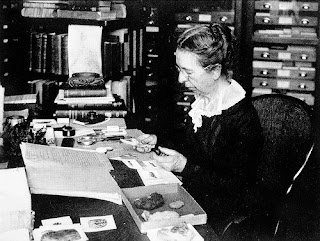
Institutions continue to celebrate Women's History Month by releasing wonderful resources. This photo of "Mary Jane Rathbun (1860-1943), working with crab specimens" is part of the Smithsonian's Flickr photostream and their "Women in Science" set.

Perhaps coincidental with these great images, the Library of Congress' Science Reference Services has published Women and Minorities in Science and Technology: a guide to Selected Resources. Like their other guides, this one contains screen after screen of references to books (general and specialized), journals, and recommended websites.

Thursday, March 12, 2009

Beyond Penguins and Polar Bears

Beyond Penguins and Polar Bears is a free online magazine aimed at K-5 teachers, with beautiful photographs and interesting articles. The link to the archives is at the top of the page, and many articles are linked to a "Virtual Bookshelf" bibliography.

If you'd like to go strait to a listing of many, many children's books, follow their "Book Club" link to their Shelfari site. Also worth reading is their blog, highlighting resources of interest in their magazine and elsewhere.

Tuesday, March 10, 2009

WAVES

This lovely image is from George Eastman House's Flickr photostream, and their new "Women!" set. WAVEs, or "Women Accepted for Volunteer Emergency Service," were women returning to general Navy service in 1942. Yes. Returning. Women first entered U.S. Naval service in 1917.

For more on the women in the U.S. Navy, the Naval Historical Center's World War II era WAVES overview and images, and World War I era Yeomen (F) overview and images are a great place to start.

Monday, March 09, 2009

When the English warship became a gun platform

The BBC has published a fantastic article on its website, 'Superguns' of Elizabeth I's navy, outlining what's been learned from a reproduction cannon. The cannon, modeled on one recovered from an Elizabethan-era shipwreck, is providing the evidence to back up the historical accounts of the Elizabethan navy as outstanding gunners, much feared.

The article is well worth reading if you've ever been curious about naval gunnery. Wonderfully written, it's explains the technical issues and why these discoveries are so exciting beyond historical interest in the English battle with the Spanish Armada--why the development of uniform cannon changed the role of the warship to one of an effective gun platform, and led to the naval warfare that is practiced even today.

And it also has a cool video of the replica gun's first firing.

Wednesday, March 04, 2009

A Three-Hour Tour

In Seattle, Wash., the Center for Wooden Boat's 33rd Annual Dinner and Auction on March 7 sounds like wonderful fun--there will be a Gilligan's Island costume contest! From the flyer:

How it works: 1) Come to the auction dressed as your favorite Gilligan's Island character, 2) Register as a contestant at the door, 3) Pose for a quick photo to be placed at the voting table, 4) Mix, mingle and have fun! Attendees will vote for you, their favorite character by placing dollar bills in your ballot box on the voting table. Winners will be announced during the live auction. One winner will be selected for each Gilligan's Island cast member to receive a great prize, so come to the auction and show off your creative side!

Don't feel like dressing up? That's okay! Be sure to bring lots of dollar bills to 'vote' for your favorite character!


I hope they share photos on their website!

Thursday, February 26, 2009

Jurn

Jurn is a new search engine, available at jurn.org which searches 1148 (as of Feb. 9, 2009) hand-picked publications, mainly in English. Focusing on the arts and humanities, many articles on preservation and history are included. It's a great search engine, returning highly relevant results. I searched very broad terms, such as sea and retrieved fascinating articles, both popular and scholarly. Specific searches, such as vessel names, also retrieved wonderful hits.

Interested in its development? Add the Jurn news blog to your feeds.

Tuesday, February 24, 2009

Great War archives

The Great War Archive contains over 6,500 items contributed by the general public during 2008, and continues to grow through its sister-site, the Great War Archive Flickr group. There is a wealth of maritime-related images here; just searching ship turns up pages and pages of images.

The Great War Archive is hosted by the University of Oxford, as is The First World War Poetry Digital Archive, where one can find Robert Graves' poem, "I wonder what it feels like to be drowned" (retrievable through the search ships).

Thursday, February 19, 2009

Wellcome Images

Wellcome Images, from the Wellcome Library collections, has some wonderful maritime imagery. Searching the term navy brings up anti-VD posters, diagrams of mortality, and even advertising images featuring sailors. The indexing & search interface works very well; searching the term star retrieves star-shaped antibodies and Christmas decorations, as well as images of the stars in the heavens.

Following the link to the Wellcome Library leads to other electronic resources such as the electronic edition of one of their most popular manuscripts, The Physician's handbook, Wellcome MS.8004, an English medical and astrological compendium from the mid-15th century.

Above: Image no. L0019401, Credit, Wellcome Library, London

Tuesday, February 17, 2009

Early photography resources

The January 2009 issue of College & Research Libraries News contains a fantastic article, Uncapping the lens : the history of early photography by Ellen Bahr. (Write down the rest of the citation, since the ALA website is notorious for changing its links & the difficulty of navigating it: C&RL News, Jan. 2009, v.70, no.1, p. 32-35. This way, you can always borrow the article via interlibrary loan!)

The article contains a listing of photography sites of interest to anyone involved with any aspect of early photography--even including late 20th century photography processes. The print article is a little easier to scan than the online version; major sections include:

  • Overviews
  • Timelines
  • Overviews of photographic processes
  • Individual photographic processes
  • Materials and workshops
  • Podcasts
  • Discussion lists
  • Organizations
  • Preservation
  • Portals
  • Exhibition catalogs
  • Searchable image collections
  • Historians

Many thanks to my colleague, Keri Koehler, for passing this issue on to me.

Thursday, February 12, 2009

Happy birthday, Charles Darwin

Charles Darwin was born on this day, February 12, 1809. Of the sites celebrating this 200th anniversary of his birth, my favorites include:


I'm going to celebrate by watching Professor Richard Dawkins on Darwin.

Tuesday, February 10, 2009

Lecture: Preserving the Free China

The Friends of the San Francisco Maritime Museum Library send along this lecture announcement:

Preserving the Free China
Saturday, February 14, 2009, 6:00 p.m. In the Maritime Library, Building E, Fort Mason Center. Donation:$5($4 Library Friends and SFMNPA) Reservations: 415-561-7040 or melani_van_petten@partner.nps.gov

San Francisco Maritime NHP’s John Muir will discuss the effort to preserve the historic Chinese junk Free China, which sailed across the Pacific to San Francisco in 1955, manned by a crew of power boat fishermen who had never sailed before.

TIA: This is the library where I work.

Monday, February 09, 2009

BibliOdyssey

Our friends at Casco Bay Boaters have sent along, and are profiling, a wonderful blog, BiblioOdyssey. The images related to maritime history are few but beautiful, such as the gorgeous Book of Eclipses that Casco Bay Boaters found there.

Tuesday, February 03, 2009

Do you have feedback for nmmimages.com?

If you missed it, Douglas McCarthy, Picture Library Manager at the National Maritime Museum, Greenwich, took the time to post a comment on my nmmimages.com post that is so thoughtful that I wanted to give it its own post. (Those of you who saw this already in the comments to the previous post can move on!) He provides his contact information, so if you have feedback on the site, please send it along--nmmimages.com has such potential that it would be wonderful if the user community responds to the staff's openness for comments.

I'm delighted to hear that I was wrong about the lack of searching instructions; Douglas very kindly points out their location, under the "Help" menu, and here's a direct link.

And do check out the Help section--the picture there is fantastic. I want a pair of sunglasses like the woman in the black & white print dress is wearing.

Douglas McCarthy's post:

Hi there

Thanks for featuring our new website and for your comments - this kind of feedback is invaluable. I am the Picture Library Manager at the NMM and have developed nmmimages.com from conception to launch over the last 14 months.

If I may respond to your points in order:

1) a "switch-off slideshow" button for slower connections is a great idea I'll investigate.

2) content: another good point made here. NMM has developed several on-line catalogues since the internet was born, featuring a variety of content presented in different ways. With nmmimages.com, we're trying to present concisely and consistently in terms of caption length and format, for example. This takes longer (we spent 3 months editing 15,000 captions last summer!) but will be worthwhile, I feel.

3) search: this is an area we're working on and improvements will come during 2009, such as keywording. The site does offer phrase (and other flexible) searching. The 'how to' guide on this is in the 'Help' area, but I'll look at making this more prominent.

4) Google is king and likely to remain so!

We have an exciting plan of development for the site, so please keep an eye out for new collections and features this year.

Do feel free to reply here or email me (douglas.mccarthy@nmmimages.com) with further comments if you wish.

Best regards

Douglas McCarthy
Picture Library Manager
National Maritime Museum, Greenwich, London

Alaska-Yukon-Pacific Exposition


The new Alaska-Yukon-Pacific Exposition Digital Collection from the Seattle Public Library Special Collections is a searcher's dream.

Interested in waterfront images? In the search box, enter: waterfront
You may be puzzled by the search results--a bunch of digitized books--but select Argus, A.Y.P. ed. and you'll be taken directly to p. 51 with images entitled, "Sections of the Seattle waterfront." Yes--it searches within the digitized texts & takes you directly to the location of your search term in the retrieved item. I love that.

There are many items there of interest to the maritime and naval researcher, and it's a wonderful snapshot of the time. And the search interface makes it easy for the specialized researcher to explore.

Friday, January 30, 2009

Reference Extract

I'm watching Planning Reference Extract with interest. According to their site:

Reference Extract is envisioned as a web search engine, like Google, Yahoo and MSN. However, unlike other search engines, Reference Extracts will be built for maximum credibility by relying on the expertise and credibility judgments of librarians from around the globe. Users will enter a search term and get results weighted towards sites most often referred to by librarians at institutions such as the Library of Congress, the University of Washington, the State of Maryland, and over 1,400 libraries worldwide.

I wonder how it will differ from one of my favorite sites, The Librarian's Index to the Internet, which describes itself as:

Librarians' Internet Index (LII) is a publicly-funded website and weekly newsletter serving California, the nation, and the world...You can also search and browse our website for the best of the Web. We have over 20,000 entries, also maintained by our librarians and organized into 14 main topics and nearly 300 related topics.

Librarians building a searchable resource of credible sites. Such a good idea that LII began doing it in 1990 as a Gopher bookmark file. (Remember Gopher?) In the current climate, they keep going, despite budget cuts. I wonder now what the future of this valuable, almost 20-year-old resource will be?

Wednesday, January 28, 2009

nmmimages.com

The new Picture Library website from the National Maritime Museum (Greenwich) makes it much easier to find their images from remote locations than it used to be--some images, if you have a fast internet connection. The home page will load a horizontally scrolling row of images without the option to skip it, so if you have a slow connection, you may want to go directly to the subject & category search page or to featured collections. (I accessed the site on a fairly fast network, and grew impatient waiting for the home page to load through the course of my searching.) The site has a useful FAQ broadly outlining policies, but doesn't address what is on this site in comparison to the digital collections previously made available over the web and currently made available on other sites.

Browsing, I saw lovely photographs, objects, paintings--a wide range of items that have been imaged. When I went to the search page, however, and entered this search in the caption search box: "cat head"
my search retrieved one image, a portrait of Captain Sir Charles Hamilton. Apparently, this text is responsible for responding to my phrase search:

This half-length portrait in kit-cat format shows the sitter with his head turned to the right.

Since the FAQ doesn't include advice on constructing search terms, I'm inferring that they don't offer phrase searching. I then tried various terms and variations. I was hoping to find images that I had found through their website before, e.g., "PAD8643 Gaff, Cat Head, Driver Boom, Bow Sprit," a watercolor--but I didn't find it on nmmimages.

It is a great website. On a fast connection, it's easy to navigate, and if you see something you like, there is a link at the bottom directly to their print sales. But I'm not sure how useful the site is for the serious researcher--there are clearly more images available on the main NMM website, but how many more? We don't know. And images that are on the NMM Flickr site are also not appearing on nmmimages (when I looked).

The casual user, or pleasure browser, might enjoy nmmimages, but the casual user might discover more NMM images through a Google Images search by including the phrase "national maritime museum"--I know I did.

Wednesday, January 21, 2009

Restrained

Ryan Harper has posted a beautiful photo of his on website, Ryanharperphotography.com,, in the blog entry entitled Restrained. He took this lovely photo of chains at SF Maritime NHP (TIA: where I work), and it won first place at the Wasatch Camera Club's advanced open division.

Thursday, January 15, 2009

200 Jobs

On January 6, 2009, the Wall Street Journal published, Doing the Math to Find the Good Jobs: Mathematicians Land Top Spot in New Ranking of Best and Worst Occupations in the U.S. (I read about this on gCaptain's excellent weekly review, Maritime Monday.)

Interestingly, librarian appears as no. 43 of the top 200 jobs, beat out by Historian at no. 7. Museum Curator? Down at no. 66. Bookbinder appears at no. 83, and Photographic Process Worker at no. 90. (Are you still doing analog photographic reproduction at your museum?) Author? No. 93, but ahead of Photographer at no. 125, and Recreation Worker at no. 131.

As for the maritime trades, Stevedore makes an appearance at no. 175, and Seaman at no. 197. The criteria that go in to the ratings include: work environment, physical demands, stress, income, and hours per week. Of course, the intangibles are omitted. I don't think they asked people in the professions if they loved what they do.

Tuesday, January 13, 2009

Your Call Radio

Another favorite radio program of mine is KALW's locally-produced Your Call Radio. Several recent programs address issues of interest to the maritime and the museum world, and are a pleasure to listen to. The hosts are skilled at fostering interesting discussions while ensuring that the experts share background information necessary to understanding the issues. It's a live, call-in show, but, again, the hosts consistently foster an environment of civil discussion. If you like the shows below, consider tuning in--and participating. (A live stream is available via KALW's Listen Live page, and the show is broadcast Monday through Friday between 11:00 AM and noon, Pacific Time.

  • Commons: Who owns human cultural heritage? Guests: McGuire Gibson, Professor in the Oriental Institute and Near Eastern Languages and Civilizations at University of Chicago, and
    Sharon Waxman, journalist and author of Loot: The Battle Over the Stolen Treasures of the Ancient World.
  • What can we learn from the transformation of our oceans? Guest: Sylvia Earle, named a living legend by the Library of Congress, Explorer-in-Residence at the National Geographic Society, and author of Ocean: An Illustrated Atlas.
  • Global commons--Whales & sharks. Guests: Guests: David McGuire, conservation filmmaker, a field associate of the California Academy of Sciences and a shark advocate; Douglas Long, Chief Curator, Natural Sciences at Oakland Museum of California and formerly chair of the Department of Ornithology and Mammalogy at the California Academy of Sciences, currently teaching in the Department of Biology at Saint Mary's College in Moraga; and, Stan Minasian, a naturalist with the Oceanic Society.

Thursday, January 08, 2009

What Lies Beneath

The BBC's documentary series, The Changing World, aired another excellent program, What Lies Beneath. I heard it via my local NPR station, KALW (of which I'm an enthusiastic member) and the program was so good that I listened to it a second time.

Win Scutt, an archaeologist and broadcaster, is engaging and educational. This program is a must for anyone with any interest in underwater archaeology, and would even be interesting to land-archaeologists, as Scutt addresses the issues of the shifting shore over time. In many places, what was once land is now underwater, and the frontiers of many archaeological fields lie submerged.

For those intimately involved with the field, and confronting the current issues of law, ethics, and unprecedented access to sites due to advances in technology, it would also be worth a listen--this documentary brings these issues into the mainstream media and might well influence how they are discussed in the future.

Tuesday, January 06, 2009

Lecture: Balclutha in the movies

The Friends of the San Francisco Maritime Museum Library send along this lecture announcement:

Balclutha in the Movies
Saturday, January 10, 2009, 6:00 p.m. In the Maritime Library, Building E, Fort Mason Center. Donation:$5($4 Library Friends and SFMNPA) Reservations: 415-561-7040 or melani_van_petten@partner.nps.gov

Park Ranger Debbie Grace will briefly tell the story of Balcutha’s movie career, including Mutiny on the Bounty, with Clark Gable. Her introduction will be followed by a showing of Souls At Sea, a rousing story of the slave trade in the 1850’s. The movie stars the Star of Finland as the William Brown, and includes the Star of Alaska (ex-Balclutha) in a supporting role. Gary Cooper and George Raft are also featured.

TIA: This is the library where I work.

Tuesday, December 23, 2008

Nautical paper plates of yesteryear

"Paper plate ad, couple at dock," from George Eastman House's Flickr photostream.

More information on the George Eastman House photography collection is available at their website.

Thursday, December 18, 2008

Sea Eagles

They may be re-introduced to England, according to a recent article in ScienceDaily. The decision is still pending, but should be made in 2009.

Should the cry of the sea eagles be heard again over England's cliffs, the words of the poet of The Seafarer will come to life:
Storms there beat the stony cliffs,
where the tern spoke,
icy-feathered;
always the eagle cried at it,
dewy-feathered;
no cheerful kinsmen
can comfort
the poor soul.

Tuesday, December 16, 2008

Archaeoastronomy

The Library of Congress has posted a new Tracer Bullet (a "pathfinder," for all you librarians out there) on Archaeoastronomy. It's a fascinating discipline, involving history, archeology, anthropology, etc. From the Tracer Bullet:

Archaeoastronomy is the interdisciplinary study of prehistoric, ancient, and traditional astronomies within their cultural context. Its sources include both written and archaeological remains and it embraces calendrics, practical observation, sky lore, celestial myth, and more. Its true scope establishes it as an "anthropology of astronomy."

How does this relate to maritime history? Well, the only photo included is The Antikythera Mechanism, discovered on a sunken Greek ship.

Wednesday, December 10, 2008

Cruise Travel & Popular Science

When I heard that Google Book Search was adding magazines, I was very happy to find Thomas Gruber's list of titles. Of particular interest to the maritime world:

Searching is via the usual Google Books interface, books.google.com, and when you retrieve a magazine article, the screen will often say things like, "Read this book." There is searching help available just for the magazines, which says:

Once you've found a magazine that interests you, you can browse other issues of that magazine from the "About this magazine" page. Click on the "About this magazine" link at the top left of the screen, and scroll down to the section marked "Browse all issues." You can then explore different issues of the magazine by clicking on a decade that interests you, and then scrolling through the individual issues from that time.

However I didn't find the "Browse all issues" displayed consistently--perhaps Google's not sure which "books" are "magazines."

Tuesday, December 09, 2008

The Naval History Society Collection, 1721-1995

Celia Hartmann, Project Archivist, Naval History Society Collection at the New-York Historical Society has sent along exciting news:

The New-York Historical Society has made available the finding aid for its newly processed Naval History Society Collection. You can find it at http://dlib.nyu.edu/findingaids/html/nyhs/NHSColl.html
where it is fully searchable.

The Collection consists of 53 individual collections, many named for renowned naval officers or vessels. These include correspondence, letterbooks, journals and diaries, lectures, essays, account books, biographical writings, genealogical information, scrapbooks, orders, notes, articles and clippings, photographs, manuscripts, and ships' logs, as well as the organizational records and correspondence of the Naval History Society itself.

The majority of the collections document American naval engagements and commercial maritime pursuits, personalities, and vessels; a few collections of British and French documents are included. The Collection as a whole provides primary sources on American naval involvement in hostilities from the American Revolution to the Spanish American War, as well as routine commercial and naval shipboard life, naval design, navigation, education and officer training. The Society's records document the founding, management, and activities of a collecting and publishing organization in the first third of the 20th century.

Processing of the Collection was made possible by the Gladys Krieble Delmas Foundation.

The finding aid is a thing of beauty; easy to navigate, each of the series is linked to the relevant container list. Related material is covered, and under "Access restrictions," it's noted that microfilms of portions of the collection are available via interlibrary loan! The access points are easily browsed, and also hyperlinked, covering names, subjects, and even document types.

The only item that seems missing in the finding aid is a link for further information, so researchers take note: Celia will be there to answer questions until the end of the month. After that, contact the reference staff at the New York Historical Society. (If their website is unavailable, try phoning 212-873-3400.)

ETA: The finding aid now has a link for further information: select List of Finding Aids to see more finding aids, a link to the institution's home, etc. (Feb. 25, 2009)

Thursday, December 04, 2008

Old magazine articles

Our friends at the Casco Bay Boaters Blog have sent along a fantastic link to the OldMagazineArticles.com. There is a lot there of maritime interest; the browse list on the home page includes links to Titanic articles and U.S. Navy uniform articles. You can also search by keywords, and the resulting list of articles includes long summaries that make it easy to select a pertinent resource. The articles I viewed were all Adobe Acrobat .pdf files, preserving the look of the original hardcopy, and many had links to relevant film clips.

The site is also good for popular coverage of related topics: business, arts, world affairs, etc. It's not a comprehensive collection, but a very nice selection.

Monday, December 01, 2008

Limelight on research for historical fiction

Julian Stockwin's article, Using the Internet in writing historical fiction has some great websites of interest to maritime authors and researchers. A feature of Limelight from Intute: Arts & Humanities, the article lists resources not only of use in maritime history research, but some leads for aspiring authors on such topics as how to submit a manuscript to a literary agent.

And if you haven't explored Intute: Arts & Humanities, set aside some time to head over there. It's amazingly well-organized and easy to use, and includes fascinating blog. (Don't miss the recent entry on Intute's hosting of the Port database.)

Tuesday, November 25, 2008

Thanksgiving at sea

The Science Buzz site from the Science Museum of Minnesota has an article about a fun Thanksgiving at sea. Dinner was made for 114 people from a dozen different countries, and the table was festive with food sculptures and fruit statues.

Thursday, November 20, 2008

Maritime art at Christie's

On Dec. 3, Christie's will hold a maritime art auction in New York. (Sale no. 2067.)

Even if you're not in the market to buy a painting, do check out their auction site. You can limit the list of artworks by many factors including medium, artist, origin, and date. And clicking on a thumbnail of the work brings up a detailed page that allows you to "Enlarge & zoom" in on the image--the images load quickly and once zoomed, are easily panned for detailed examination.

You can also explore further by entering "maritime" into their keyword search box; it will retrieve all the items in this auction, plus maritime-themed items from other sales.

Tuesday, November 18, 2008

Straddling the world of the written word

Joan Druett, author of eighteen wonderful books, has a delightful blog, Straddling the world of the written word (now appearing in our blog list). Many of the posts deal with things maritime, but she also discusses the broader world of books, libraries, and publishing.

And don't miss the whisperings from Spy Mouse!

Thursday, November 13, 2008

Casco Bay Boaters

There's a new blog in our resources list, Casco Bay Boaters. It's a great resource, even for those not boating in Casco Bay--the links under the "Charts" and "Weather & Tides" tabs are excellent. (There are even links about the phases of the moon.) There are also interesting original posts on many maritime topics, as well as highlights from other blogs, on everything having to do with the sea.

Wednesday, November 12, 2008

Alexander Selkirk & Robinson Crusoe

The recent news about the evidence of Alexander Silkirk's campsite on the island of Aguas Buenas (renamed Robinson Crusoe Island) reignited my interest in the debate over his connection to Defoe's character Robinson Crusoe. A CUNY website, Alexander Selkirk, has a thorough discussion of Selkirk in the context of other readings on castaways, and links to the BBC's excellent article on Selkirk and his possible connection to Crusoe.

Although this site hasn't been updated since 2002, it was developed as part of a course in the 18th century English novel that has lots of great resources and reading lists. Even the paper topics are still there--check them out if you're looking for suggested ways to approach the book.

Monday, November 10, 2008

Harvard opts out

There has been a lot of coverage and analysis of the recent Google Books settlement with publishers and authors, but it's finally had an impact on the maritime world: see Jennifer Howard's article in the Chronicle of Higher Education, "Harvard Says No Thanks to Google Deal for Scanning In-Copyright Works." Harvard's libraries contain a wealth of material on business, including the shipping industry, and their reasons for opting out include concerns over prices and quality. I believe this is very good news, as they are committed to exploring "other ways to open up its collections more broadly for the common good."

I read about this on the Open Content Alliance blog--the folks behind the Open Library catalog and the Internet Archive. These are becoming essential resources. If you're interested in digital books, start with the Open Library--it's an easy-to-use catalog that includes the over 1 million digital books at the Internet Archive. (You can limit your search to "scanned books only" right under the home page's search box.) If you're interested in other formats (audio, video, etc.), head directly to the Internet Archive, which also includes the WayBack Machine. If something you're interested in has disappeared from the web, chances are you can find it archived in the WayBack Machine.

Google Books is still a useful tool; it still functions as a multiple text index and includes many books still under copyright which, if you're lucky, show the snippet view of the passage that interests you. But I start with the Open Library and the Internet Archive; they present each book in multiple formats, and soon will release the next version of their online flip-book reader (which I was lucky enough to see last week, and which is a pleasure to use).

Wednesday, November 05, 2008

The portrait of a skeleton pirate

The story of the painting of the cover of Tim Powers' On Stranger Tides has been told by the artist, James Gurney. Perhaps better known for his Dinotopia books, he writes and illustrates Gurney Journey primarily for artists and writers, but it is also interesting for readers who've ever wondered about a cover illustration, or just how one might get a realistic animated skeleton model.

Monday, November 03, 2008

Transcience and Woolf

The BBC has run a story on the newly released recordings from the British Library, featuring some of the greatest writers of the past century, including the complete version of the only known recording of Virginia Woolf. (A two-minute excerpt is available with the article, and over seven minutes of her "Eulogy to words" is available on the BBC Four's Interviews site.)

What has this to do with maritime history? Her novel, To the Lighthouse, has often been called a meditation on transience. Lighthouses, beacons of life-saving, remind us always of the transience of life; of the need for the light because of the loss of life at that site.

Woolf's living voice--lost. This recording? We strive to preserve it not only through the British Library's staff's care, but through publication and wide distribution of many, many copies.

The sea? Eternal?